Skip to content
29 Jan – 8 Feb 2026

African Indies – A Continent of New Directions

Published on:

IFFR 2026 boasted an impressive number of African indie titles in the official selection – reflecting the continent’s booming scene. The IFFR Pro Dialogue: African Indies – A Continent of New Directions industry panel brought together four filmmakers and producers to discuss the industry they’re building. Under the guidance of moderator and IFFR programmer Lyse Nsengiyumva, Jorge Cohen (Angola), Nolitha Mkulisi (South Africa), Mamadou Dia (Senegal), and Sue-Ellen Chitunya (Zimbabwe/US) ventured into deep reflection on the compelling new models arising from this wave of indie cinema.

Beyond authenticity: redefining the terms

Nsengiyumva opened the panel by presenting the much-used concept of the “authentic voice” – which revealed a deceptively tricky pattern the filmmakers encounter regularly. The pushback is not against authenticity itself, but rather against it as a limiting category.

“I am very cautious of the word authentic because we are the only filmmakers being asked to be authentic. You don’t ask a French filmmaker to be authentic,” Mamadou Dia, director of Nafi’s Father (2019) and Coumba (CineMart x HBF project in development 2026), observed. “Kids want to make sci-fi… allow us to exist in every way we want to.” A claim to the full spectrum of cinema.

“I am very cautious of the word authentic because we are the only filmmakers being asked to be authentic.”

Nolitha Mkulisi, director of Let Them Be Seen, reframed the conversation, borrowing from playwright Lorraine Hansberry: “I would use the word ‘specificity’ over ‘authenticity’.” The alternative shifts from the burden of representing an entire country or continent, to the freedom to tell one story, deeply and truthfully. She made her experimental debut for under €1,000, working with her editor for four years to achieve something precise and personal. “I was able to be very specific about what I wanted to make and say.”

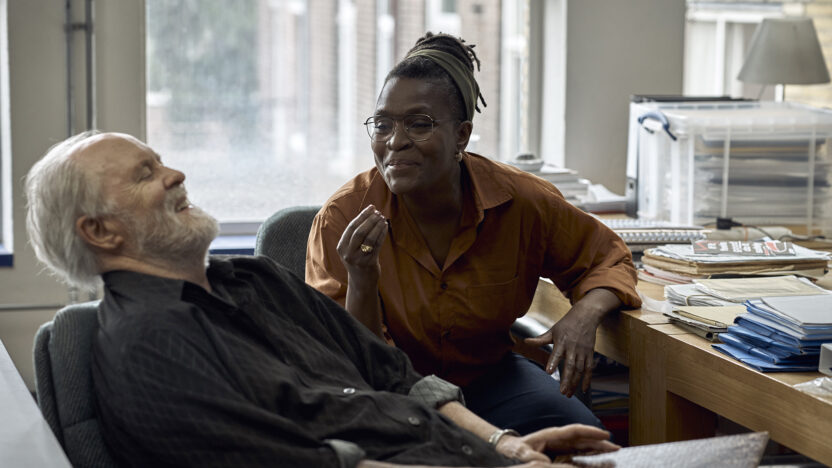
Film still: Let Them Be Seen

“You can get to your 30s in Angola without seeing an Angolan film,” Jorge Cohen, director of Meu Semba (Tiger Competition), explained how filmmakers presenting some of the first international films from their countries, there’s both opportunity and responsibility. That shouldn’t limit range – it should expand what’s possible.

Navigating co-production strategies

The conversation around international co-production demonstrated how the filmmakers are thinking strategically about when to collaborate and when to maintain control.

Cohen raised a critical question with My Father’s Shadow, the acclaimed Nigerian film that competed for the Oscars as a UK entry. “Who owns the IP of the film? That was quite tragic in a way.” The conversation underlined the importance of understanding what you’re trading in international co-productions.

Sue-Ellen Chitunya, producer of God Sleeps on Sundays, was candid about the trade-offs. “There’s a certain identity of the film that you lose” when cultural nuance gets lost in translation. This growing awareness is creating new strategic approaches – valuing IP, negotiating derivative rights, bringing in lawyers early.

Inventing new production models

What emerged most powerfully was how filmmakers are turning constraints into creative production models.

“We all know everyone in movies, so it becomes like a collective, almost like crafting.”

Cohen described Angola’s approach as “very personal. We all know everyone in movies, so it becomes like a collective, almost like crafting.” With wit, he rebranded low-budget, local productions as “ecological productions” – local crews, owned equipment, minimal travel. “I want to do the film with the most resources I can get at the time.”

Film still: God Sleeps on Sundays

Chitunya relayed how she has been actively building infrastructure while making films. On her Zimbabwe shoot, she trained department heads during production. She’s consulting with the Uganda government on film support systems. “We are who we need,” she said, “and we need to do the work instead of looking outside.”

“We are who we need and we need to do the work instead of looking outside.”

Dia explained how he writes films “for community first,”  touring Senegal with open-air screenings – building audiences while making work. 

The conversation revealed several examples of sustainable models that prioritise local connection over international validation. The call was clear: more South-South collaboration, Pan-African knowledge-sharing, government partnerships as the path ahead.

Film still: Meu Semba

Looking ahead

Dia cut to the core issue: “I don’t think our main challenge now is making movies… it’s distribution.” The films exist. They’re being made with ingenuity and specificity. But when one cinema serves a million people instead of eight thousand, even the best film can’t find its audience.

Cohen’s vision for the future was grounded in the shared experience of cinema: “Cinema needs to be a tool to engage people, to engage communities, to change perspectives.”

Africa’s indie boom seems to only be getting started, with filmmaking communities writing the rules for their own trajectory.

by Roxy Merrell

A list with articles