Reality Check: Building the Future of Immersive Storytelling
During IFFR 2026, Reality Check brought together a cross-section of the immersive field to reflect on a shared question: how can immersive storytelling be supported in ways that allow artistic ambition, institutional responsibility and long-term viability to develop together? Titled Reality Check: Building the Future of Immersive Storytelling, the one-day symposium marked the launch of Lightroom, IFFR’s new industry platform for immersive and non-linear work.
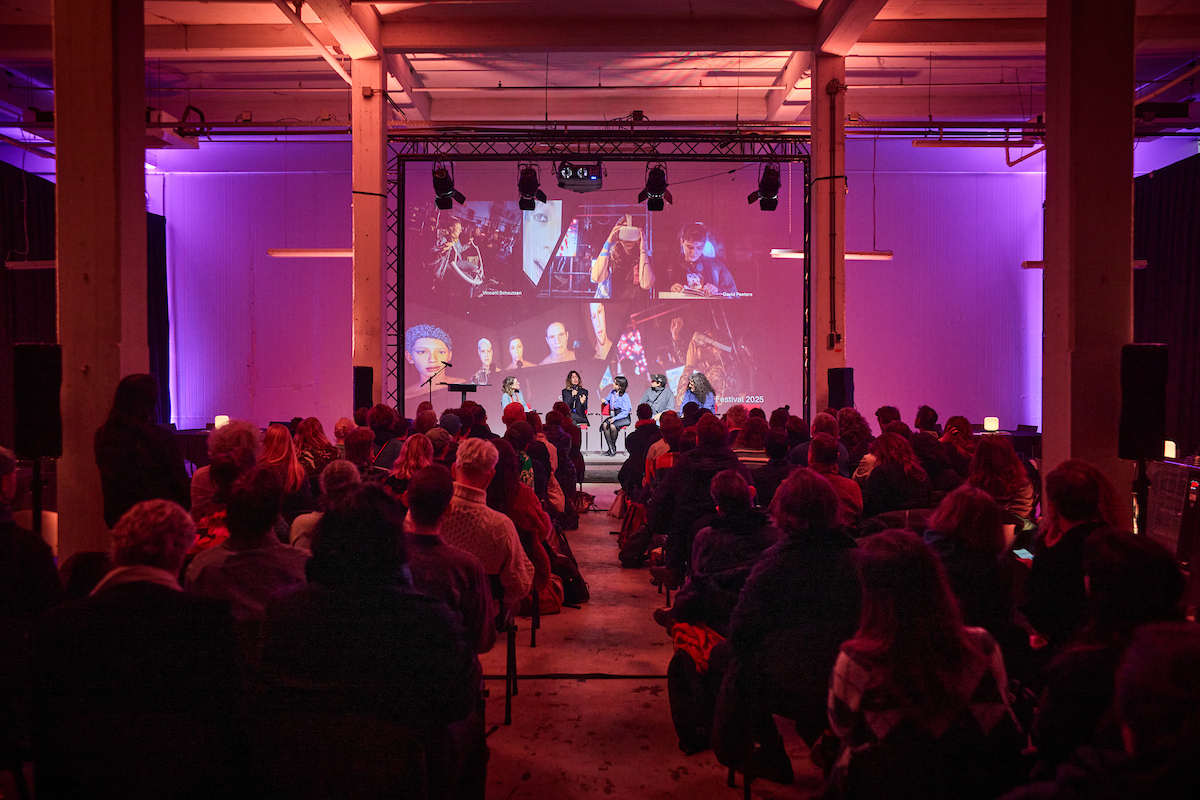
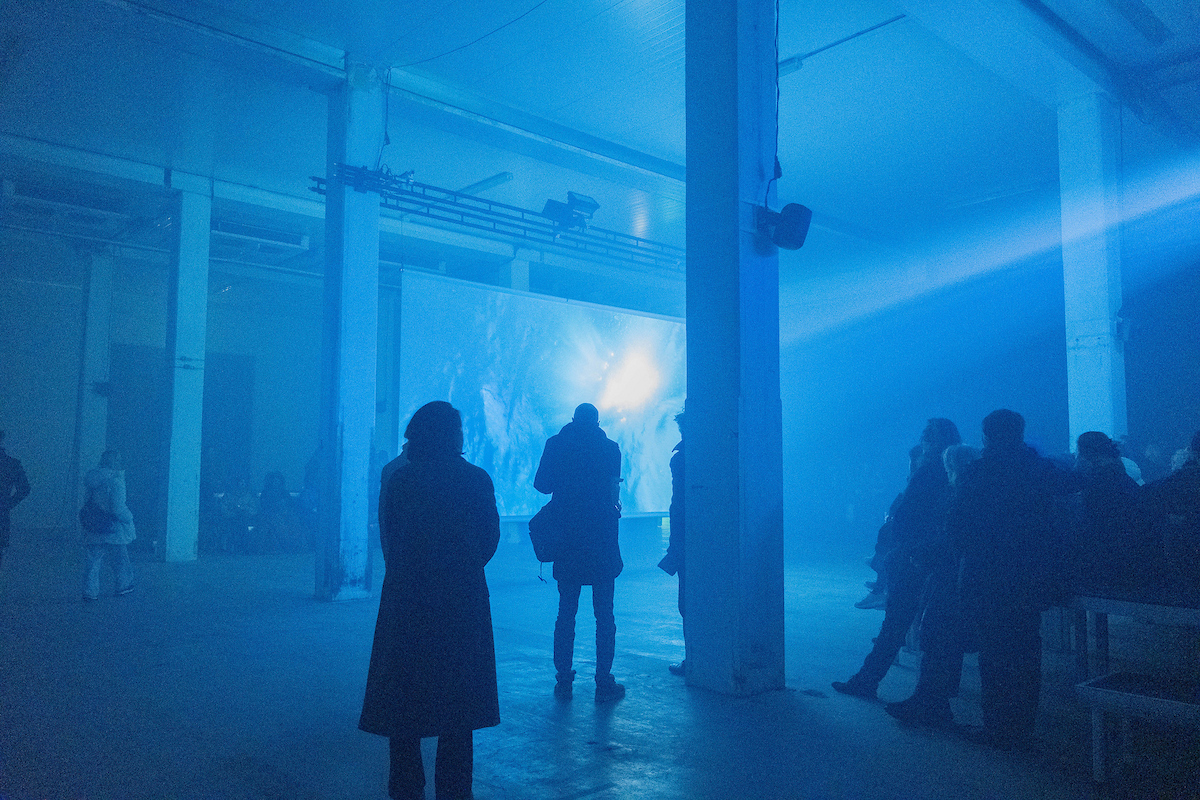
In total, 110 artists, producers, curators, developers, funders, policymakers and venue partners gathered at Katoenhuis to move beyond diagnosis and to explore what might be needed next – featuring a spectrum of participants like Myriam Achard (Centre Phi), Chanel Kong (M+), Oriane Hurard (Atlas V), Max Parmentier (Film Fund Bavaria), Evelyne Hinque (BOZAR), Timothée Engasser (director of Home is Where the Heart Is, IFFR Tiger Short Competition 2026), David Massey (Wales Millenium Centre), Carole Kremer (Luxembourg Film Fund) and Katharina Weser (Reynard Films).
Rather than framing immersive storytelling as an emerging novelty, discussions throughout the day started from a different premise: that whilst the creative output in the field continues to excel, the supporting infrastructure around it is still catching up. As one recurring formulation put it, the challenge is not a lack of creativity, but “a lack of alignment between how immersive work is made, shown and sustained”.
Overall, the symposium highlighted three ways forward to overcome this misalignment: defining “immersive” to set clear expectations and open institutional pathways; building community and collaboration across disciplines despite limited reach and distribution; and ensuring sustainability through proper documentation, archiving and shared resources to preserve XR’s history for future creators.
Defining immersion
The opening session focused on a deceptively simple question: what do we mean when we talk about “immersive” work? While the term is widely used across cultural, technological and industrial contexts, its meaning often shifts depending on who is speaking and for what purpose.
Participants reflected on how definitions of immersion influence everything from artistic choices to funding criteria and audience expectations. Is immersion primarily a technological condition, tied to headsets and interfaces? Or is it an experiential quality that can also emerge through spatial design, performance, sound or narrative structure?
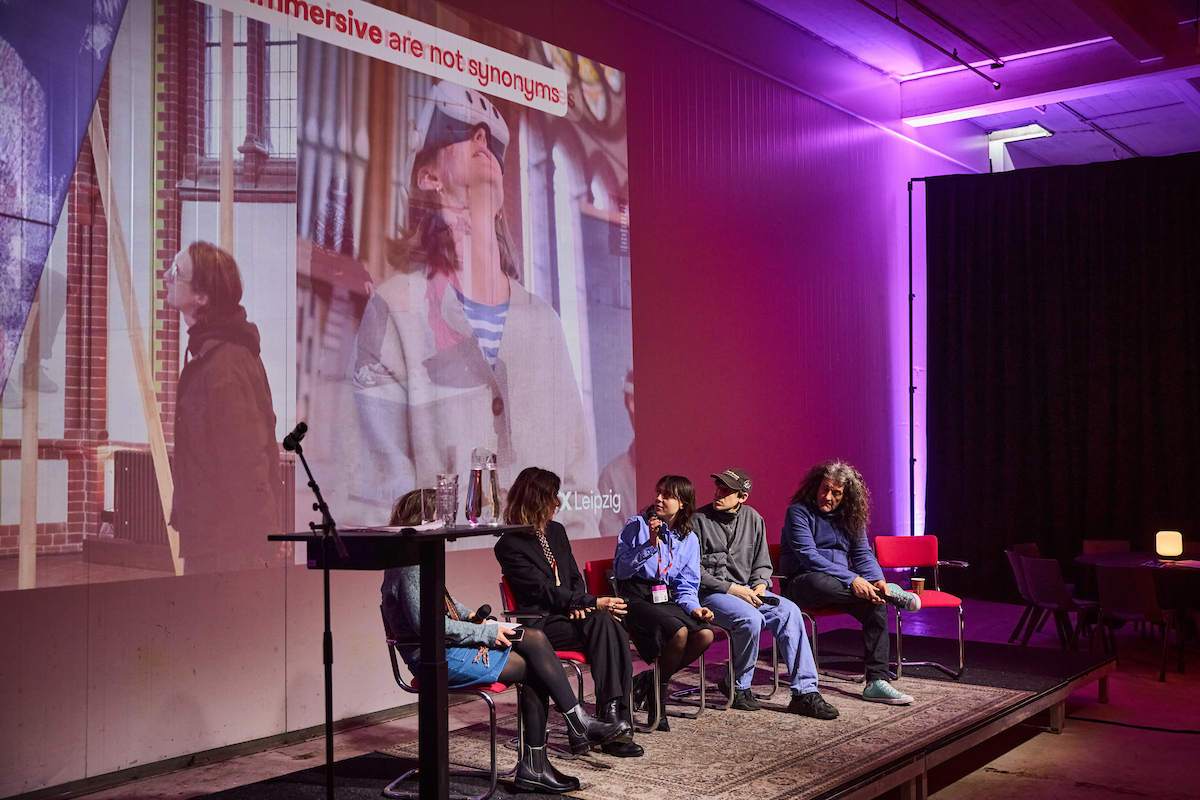
Several speakers emphasised that immersion should not be reduced to format alone. Instead, it was described as a way of structuring attention, presence and engagement. As one phrase that surfaced during the discussion suggested, “immersion is not what the technology does to the audience, but what the work asks of them”.
By unpacking these differences early on, the session set a shared reference point for the rest of the day. It also highlighted how language carries power. Definitions do not simply describe the field, they actively shape what kinds of work are recognised, funded and circulated.
Audiences, access and responsibility
Building on this, the symposium turned to audiences. If immersive work is defined in particular ways, who does that make it for? And who might be excluded as a result?
Discussions moved beyond the idea of a single “immersive audience” and instead addressed the diversity of publics that immersive works can engage, depending on context. Participants spoke about the importance of mediation, care and accessibility, and about the difference between users, audiences and communities.
Questions of fatigue and expectation also surfaced. As immersive experiences become more visible, audiences arrive with assumptions shaped by gaming, entertainment or marketing contexts. This places new responsibilities on artists and institutions alike. As one shared reflection put it, “access is not only about who can enter the space, but about how people are invited to stay, understand and return”.
Funding and compromise
If definitions and audiences shape the field, funding determines what is possible in practice. A central session examined how current funding models affect immersive work, and where compromises are often made silently.
Participants discussed how evaluation frameworks borrowed from film, performing arts or innovation funding can struggle to accommodate immersive practices, which often require longer development periods, hybrid skill sets and ongoing maintenance. At the same time, funders operate within policy and accountability structures that limit how quickly criteria can change.
Rather than framing this as a simple opposition between public and private funding, the discussion explored how different forms of support might work in complement. Examples were shared of co-commissioning models, institutional partnerships and philanthropic involvement that allow risk, resources and visibility to be distributed more evenly.
A recurring theme was the need to make compromises visible. As one formulation captured it, “the problem is not that compromise exists, but that it is rarely named”. Making funding conditions more transparent was seen as a step towards fairer working relationships and more sustainable practices.
Exhibition formats under pressure
Another major focus of the day was exhibition. How immersive works are shown has far-reaching consequences for audience experience, labour conditions and circulation.
Participants compared exhibition models across festivals, museums, touring contexts and hybrid formats, noting that many immersive works are still presented as one-off events. While premieres and high-profile showcases can be valuable, they do not always align with the needs of works that are costly, technically complex and time-based.
Rather than calling for a wholesale rejection of existing models, the discussion pointed to the need for greater flexibility. Different works may require different exhibition strategies, and not all immersive projects benefit from the same metrics of success.
The conversation also touched on the practical realities of exhibition: staffing, mediation, technical support and care for audiences. These elements are often invisible, yet essential to the sustainability of immersive presentation. As one observation put it, “format is not neutral; it decides what kind of work can survive”.
Beyond the premiere
Questions of exhibition led naturally to distribution and circulation. Many participants noted that immersive works often struggle to move beyond their initial presentation, despite significant investment of time and resources.
Discussions highlighted the absence of clear distribution pathways for immersive storytelling, particularly across borders and institutions. While some works tour successfully, others lack the infrastructure, documentation or technical standardisation needed to travel.
Rather than presenting distribution as an afterthought, participants argued for treating circulation as part of the design process from the outset. This includes thinking about versioning, rights, maintenance and long-term access. As one shared insight phrased it, “afterlives don’t happen by accident; they need to be planned”.
At the same time, the symposium acknowledged that premiere requirements are often embedded in funding frameworks, and that festivals and venues frequently operate within these conditions. The discussion therefore focused less on rejecting existing systems, and more on identifying where differentiation and dialogue could open up new possibilities.
A shared direction
Across sessions, a number of common threads emerged. Participants repeatedly returned to the idea that immersive storytelling does not lack innovation, but suffers from fragmentation. Bridging the gap between artistic experimentation and professional infrastructure was seen as a shared responsibility.
Reality Check did not aim to produce a single set of solutions. Instead, it functioned as a working space where assumptions could be questioned and alternatives explored. The closing session invited participants to reflect on what the field might need to stop doing in order to move forward, as well as what could be strengthened or developed further.
In this context, Lightroom was framed not as a break with IFFR’s past, but as a continuation and consolidation of long-standing strengths. Building on three decades of Art Directions and IFFR’s experience in connecting artistic and professional ecosystems, Lightroom seeks to create clearer pathways between public presentation, industry exchange and long-term support.
Reality Check is part of IFFR’s broader commitment to knowledge exchange and sector development. A full written report, capturing the insights, tensions and directions that emerged during the symposium, will be published by the end of March. This report will also reflect further developments within Lightroom and IFFR’s immersive strategy.
Supported by