Marwan Hamed: Master of Egyptian Genre Cinema
From mystery thrillers, corruption dramas and crime epics, to historical sagas and the biopic genre, Marwan Hamed has proven to be a master at combining grand emotions, astonishing mise-en-scène and breathtaking performances in his cinema. IFFR is particularly proud to present his body of work spanning 20 years in his first European retrospective.
It all starts with Egypt. An ancestral land that shone throughout antiquity and gifted humanity, in more recent history, with modernist savants such as Taha Hussein, known for his works of literary criticism on pre-Islamic poetry; Naguib Mahfouz, winner of the Nobel Prize for Literature in 1988; or prodigious singer Umm Kulthum. In a fertile terrain where the arts have always thrived, Egyptian cinema from its inception grew rapidly into a successful national enterprise, based on an economic model of distribution across the Arab world. Marwan Hamed’s blockbuster films, broadly inescapable in Egypt, can be examined in the light of a nearly hundred-year-long film history.
The Golden Age of Egyptian cinema, which ran from the mid-1930s all the way to the 1950s to become only second after Hollywood, was dominated by genres – melodramas, farces, Bedouin tales of love and musicals. A direct heir of this tradition, Marwan Hamed has managed to transform it into a grander scale cinema of high emotions, by pushing the exploration and blending of various genres in the most dexterous manner. His movies show a distinct talent for capturing viewers’ attention through lavish formal virtuosity as well as masterful storytelling. Outstanding performances are equally a marked aspect of his style.
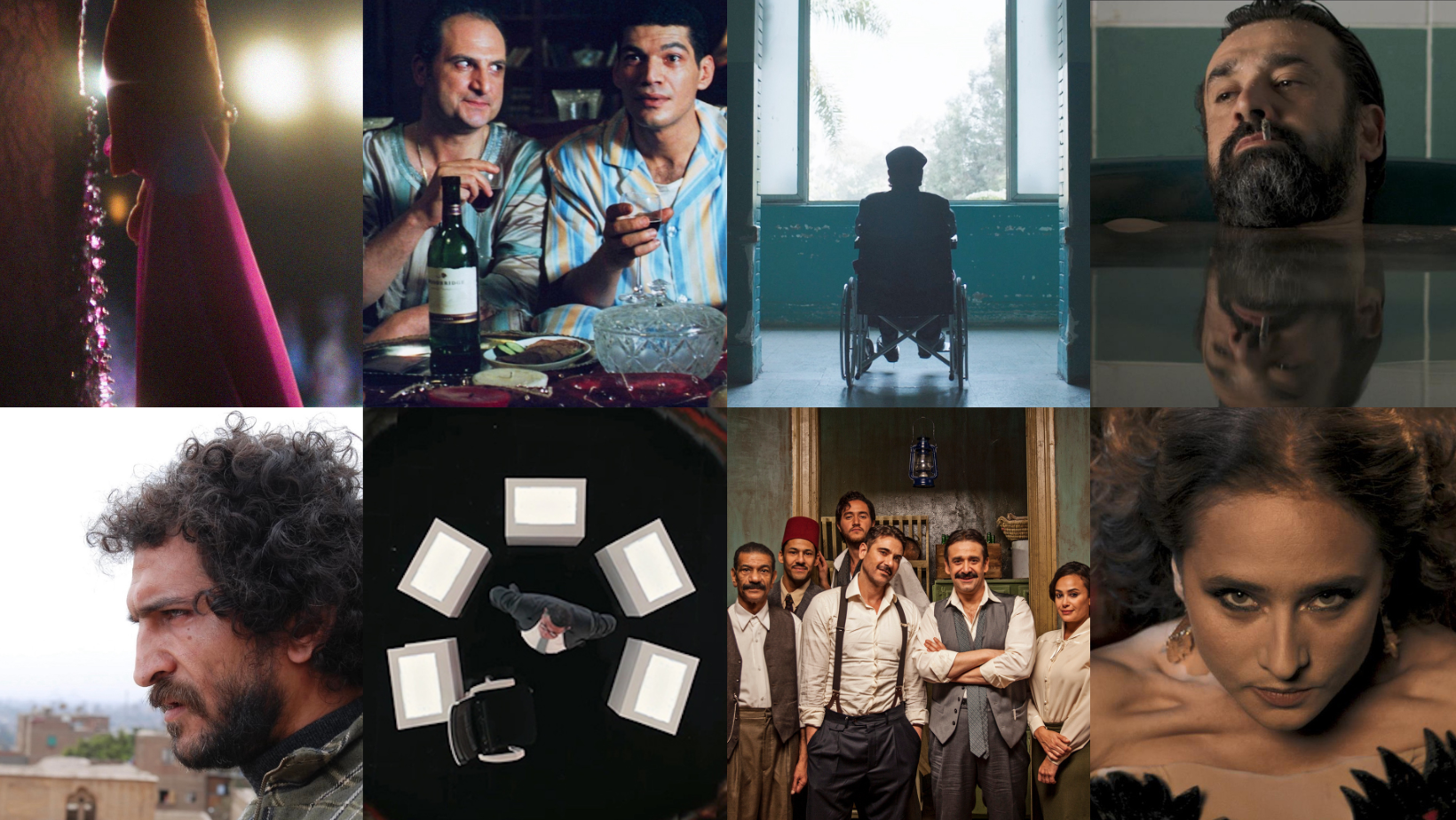
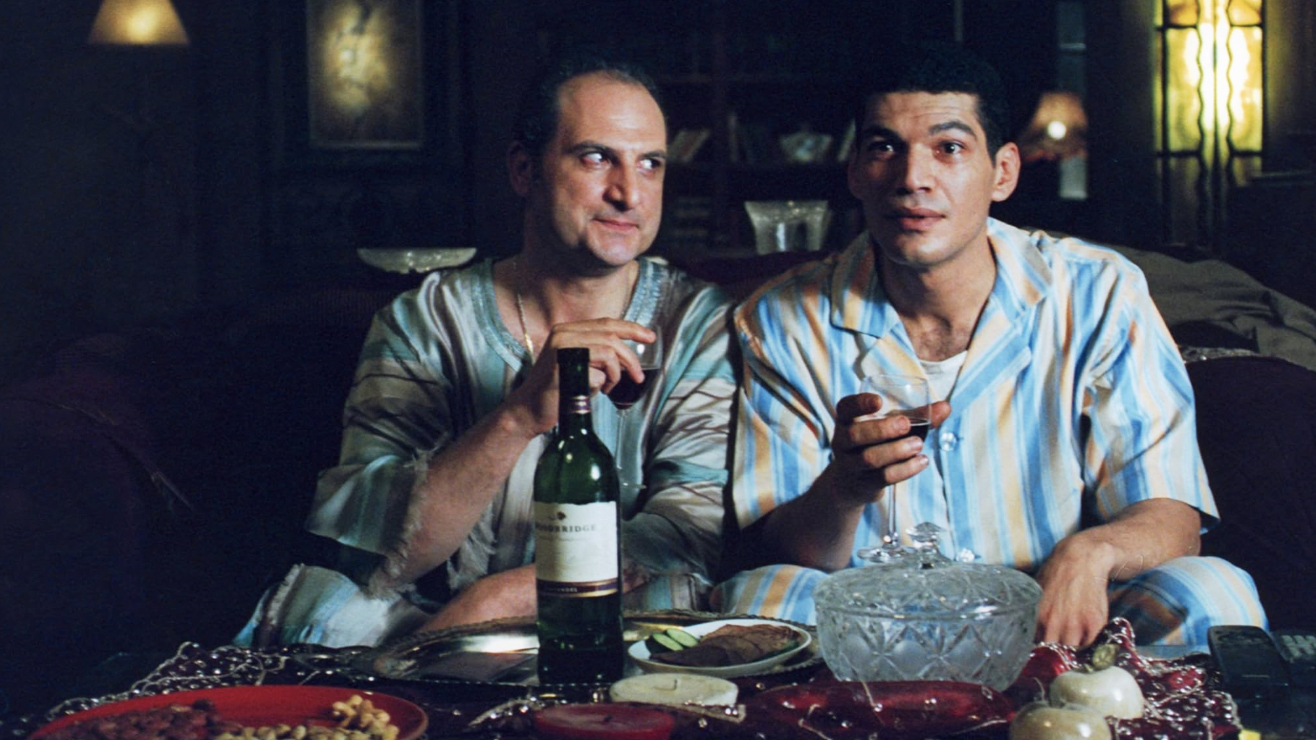
In his first feature The Yacoubian Building (2006), Hamed successfully blended melodrama with realism to achieve his most political film to date; its depiction of homosexuality, Islamic fundamentalism and State corruption anticipated the end of an era. The film portrayed the lives of the inhabitants of a downtown Cairo building, a microcosm of the social fabric of a fallen, corrupt metropolis during the Mubarak era; and right from the start Hamed relied on Egypt’s distinctive star system to incarnate his characters. Working with legends such as Adel Imam is still a much-cherished memory for the director. Stylistically, the viewer might still find in this film traces of a certain theatricality characteristic of cinema in the old days. The film was based on the eponymous visionary novel by Alaa Al-Aswany and adapted by Hamed’s late father, prolific screenwriter Wahid Hamed, who remains an inspiration to him till this day as a writer and thinker.
The adaptation of highly successful novels to the silver screen has roots in another enduring tradition of Egyptian cinema, which flourished in the aftermath of the 1952 Revolution. A new wave of filmmakers began to rely on literary works, starting with legendary director Salah Abou Seif, who in 1957 adapted a Naguib Mahfouz novel, The Beginning and the End. As political cinema reached its peak in the 1970s, literary works became more systematically the goldmine where auteurs like Youssef Chahine dug for their inspiration (The Land made in 1969 is based on a novel by Abderrahmane Al-Charkawi). In those years, some seventeen novels by the prodigious Naguib Mahfouz alone were made into films.
Most of Hamed’s works are adaptations from a distinct literary source, with the exception of Ibrahim Labyad (2009) that was based on an original screenplay by Aboelhassan Abbas. Besides making films, reading is one of Hamed’s favourite activities. He acknowledges how he has always felt influenced by the huge heritage of storytelling that prevails in his native country. “When you have a novel in your hands, and you know the story is good, the characters are great and you are moved, it triggers your imagination. I want to burn it into a film right away! From there on, I try to work on universal emotions.”
With his sophomore film Ibrahim Labyad, Hamed took his audiences by surprise by delivering, with bewildering assurance, an emotionally intense action-packed crime melodrama. Ahmed El Sakka gives a mesmerising performance as a fierce mobster capable of both great ruthlessness and breathtaking romantic passion. In this work of ‘Scorsesian’ magnitude, Hamed extends his exploration of the city’s social fabric by descending quite a few steps further into a gangsters’ underworld, in order to highlight the struggles of characters who seem to have emerged from a nightmare filled with unimaginable violence. Disliked by critics and audiences alike at the time of its release for its excessive use of violence and profanity, Ibrahim Labyad was later praised as a cult movie. It has a passion reminiscent of the days of Cinema terzo, when popular actor Farid Shawki (Negmat Terzo or the ‘King of Terzo’), incarnated the masses’ dream of defeating the wealthy and powerful by combining lower-class virility with an action-oriented persona¹.
This radical departure from The Yacoubian Building is actually symptomatic of an insatiable search for novelty in genre, which has become over the years Hamed’s trademark. It’s a state of mind the director fostered during his studies at the Higher Institute of Cinema under the mentorship of Khairy Beshara², a legendary director who greatly influenced him. In those years, Hamed learnt how to “open and free his mind to find the emotion.”
How to portray a character plagued by guilt and trauma for causing the death of his own daughter and wife in an accident, and make him relatable? This question, which has everything to do, precisely, with finding the emotion, was very much on Marwan’s mind when he discovered, with a sense of wonder, the hallucinatory world of blockbuster novel The Blue Elephant by Ahmed Mourad. The pair soon began their enduring collaboration, The Blue Elephant 1 (2014) further bolstering Hamed’s magician-like ability to relentlessly take off towards utterly new universes. The film deftly weaves together psychological noir, the supernatural thriller and the murder mystery, cinematically translating the essence of the novel by building tension between reality, mythology and fabulation. In the spectacular sequel, The Blue Elephant 2 (2019), Dr. Yehia, the suave but troubled psychotherapist with an addictive personality, returns initially serene and settled, in a more action-packed, special-effects dominated movie in which Hamed dives deeper into the horror genre.
The Originals (2017) reveals another ability of our director, previously hidden – a feel for the quirky, for irony and dark humour, but also a vested interest in exploring where societies are heading, and the ever-growing ruthlessness of the corporate world and mass surveillance. The Originals is above all a satire infused with contemporary social critique, where the grandeur of ancient Egypt (a glimpse into a possible salvation?) is visually evoked through motifs in which both modern and old symbols clash and merge; this artistic choice gives the film a fascinating aesthetic outlook. Through its metaphorical and philosophical pondering on identity loss and surveillance culture, the film invites the viewer to fill the gaps with their own imagination.
In Diamond Dust (2018), we journey back into the murder mystery/thriller category with elements of noir while new themes are investigated in a familiar middle-class milieu: intergenerational violence and the elusiveness of justice, prompting the lead character to take the law into his own hands. Hamed delivers yet another breathless thriller involving secret networks and dangerous substances. On a dramaturgical level, Diamond Dust’s narrative thrust is also broadly constructed on the classic motif of father and son in Arab drama, where the death of the father represents the death of law itself, or the birth of the narrative³. As the director reminds us, “Family is big in our part of the world, ties are strong, with heavy emotions, which always brings conflict.”
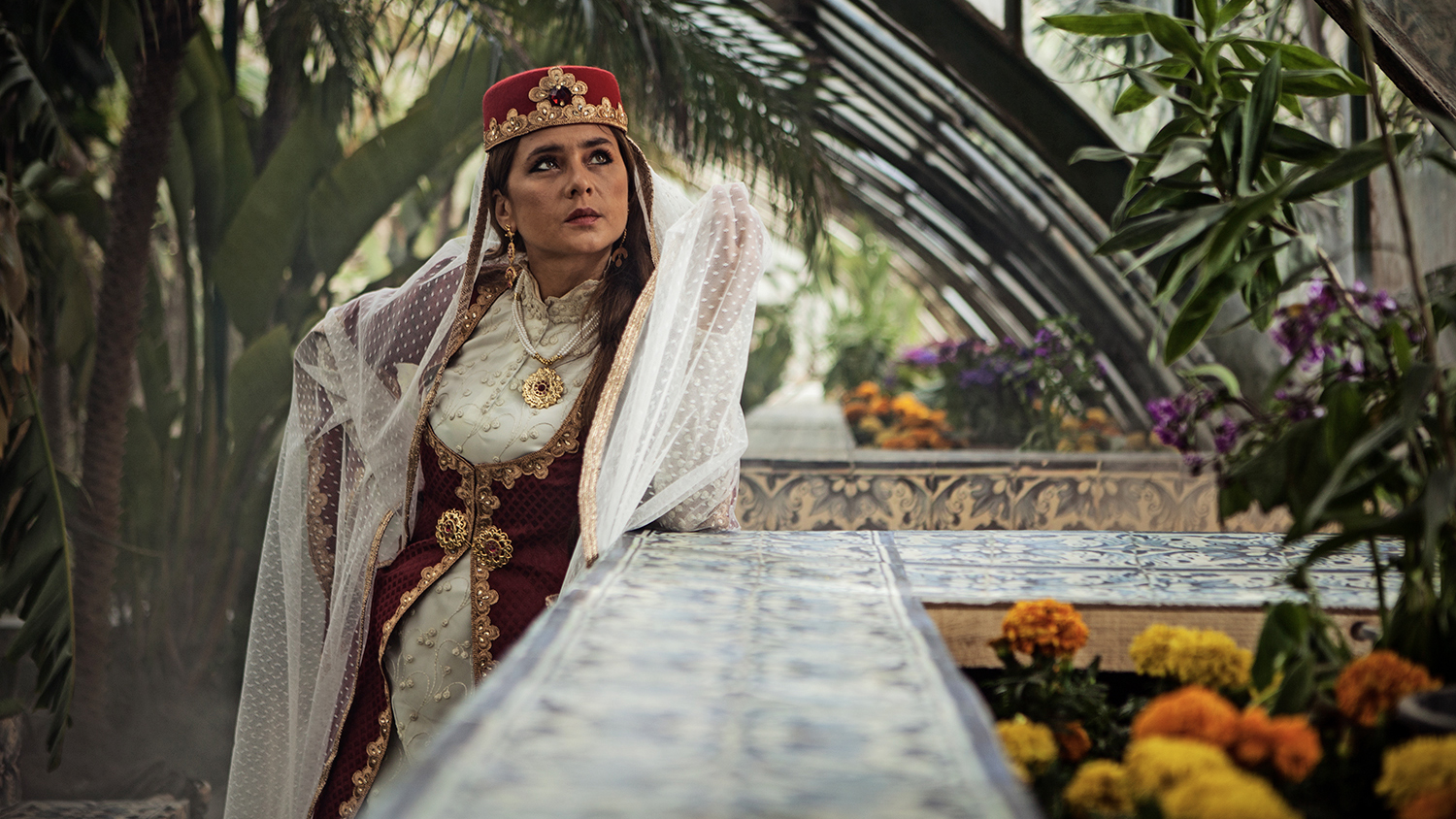
Hamed confesses that, with time, he feels a gap may be opening up vis-à-vis his younger audiences. He wonders whether new generations in contemporary Egypt have enough or any awareness of the past. Recognising how much the country has changed in the course of a century, history becomes a prime preoccupation. With the anti-colonial historical epic Kira & El Gin (2022), Hamed takes us into new territory. The film is full of life, capturing the hearts of its powerful characters and giving a deeply human portrayal of their individual struggles and the higher cause which unites them.

No matter how much Hamed enjoys renewing the form and learning from it, out-of-the ordinary characters incarnated through exceptional performances remain at the centre of his films. His is a precious gift of intensely stirring our emotions through grandiose storytelling and mise-en-scène as well as mesmerising acting, which Hamed presents to us once again with his latest film El Sett, a biopic on legendary icon Umm Kulthum. Make no mistake – in Egypt, the wider Arab world and far beyond, it is a challenge of colossal proportions to tackle this topic and make a successful fiction film about the life of a legend referred to as “Egypt’s fourth pyramid”. When we discovered El Sett, it became clear it was time to celebrate Hamed’s body of work at IFFR.
– by Delly Shirazi
Footnotes
1. In the old days, movie theatres reflected the hierarchies of society through their division into three categories: first-, second- and third-class. The latter, Cinema terzo, differed in programme, equipment and price.
2. Khairy Beshara is known among other things for re-defining realism in the 1980s.
3. Arab & African Filmmaking, Lizbeth Malkmus and Roy Armes, p. 110.
A list with articles
-
-
IFFR-supported films at the 70th BFI London Film Festival
Published on:-
CineMart
-
Hubert Bals Fund
-
IFFR Pro
-
Stories
-
Tips
-
-
Hubert Bals Fund announces HBF+Europe: Post-production Support selection 2026
Published on:-
Hubert Bals Fund
-
News
-