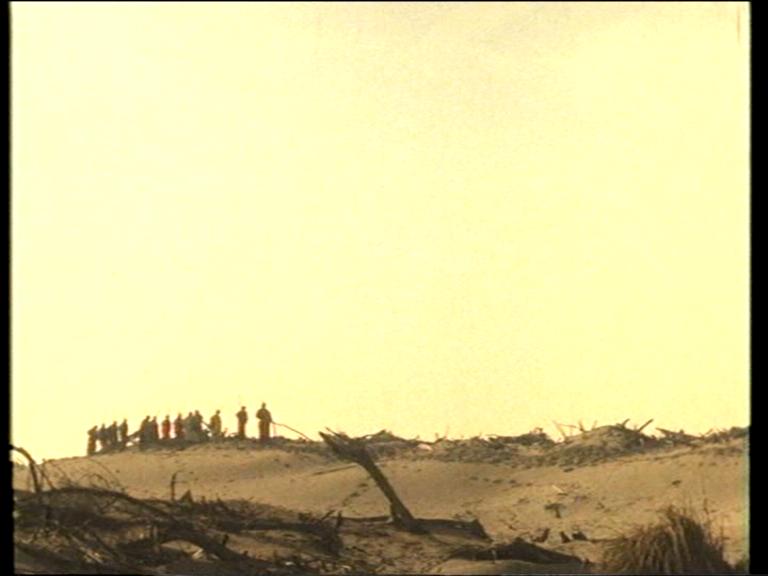
Judas’ Kiss had a gestation of more than a decade. First suggested to Benvenuti in 1976 by the reading of Mario Brelich’s L’opera del tradimento (The work of treason), the film project developed through the years as a scrupulous research on both canonical and apocryphal Gospels. Benvenuti committed himself to the task of shedding new light on the figure of Judah, questioning his statutory image of traitor. Faithfully respecting the Gospels’ accounts, Judas’ Kiss depicts a different Judas, one who might have actually been Christ’s main accomplice in the attainment of the latter’s fate of death and resurrection. This provocative thesis takes shape in the film through a compelling and elaborate visual treatment. Benvenuti in fact stages Judas’ Kiss as if it were a popular representation of the mysteries, and consequently arranges his images as arrestingly beautiful tableaux vivants, drawing their inspiration from the golden age of Italian religious painting, i.e. from Giotto till Caravaggio. By presenting Christ as a meta-historical figure, Benvenuti also regards his film as a theoretical response to Rossellini’s approach of accepting the Gospels’ accounts as factual chronicles for his Messiah (1975). Premièred at the Venice Film Festival in 1988, this astounding masterwork has since then remained almost invisible.
Film details
- Country of production
- Italy
- Year
- 1983
- Festival edition
- IFFR 2009
- Length
- 87'
- Medium/Format
- 35mm