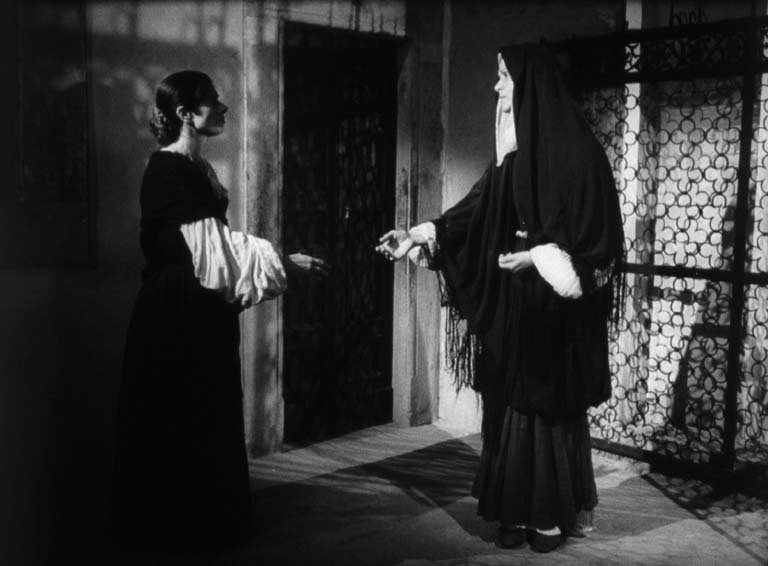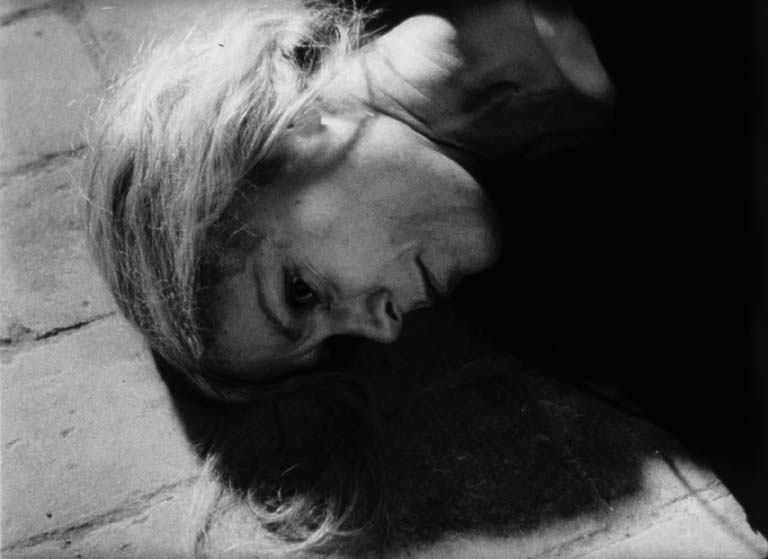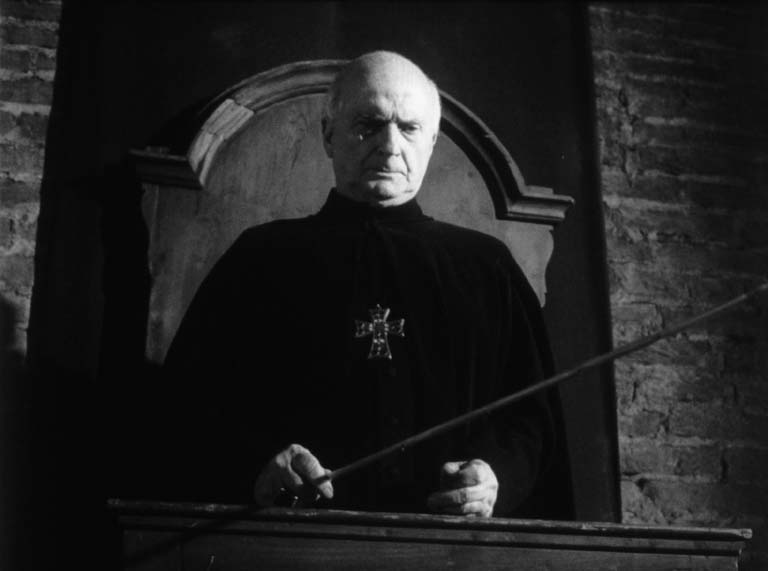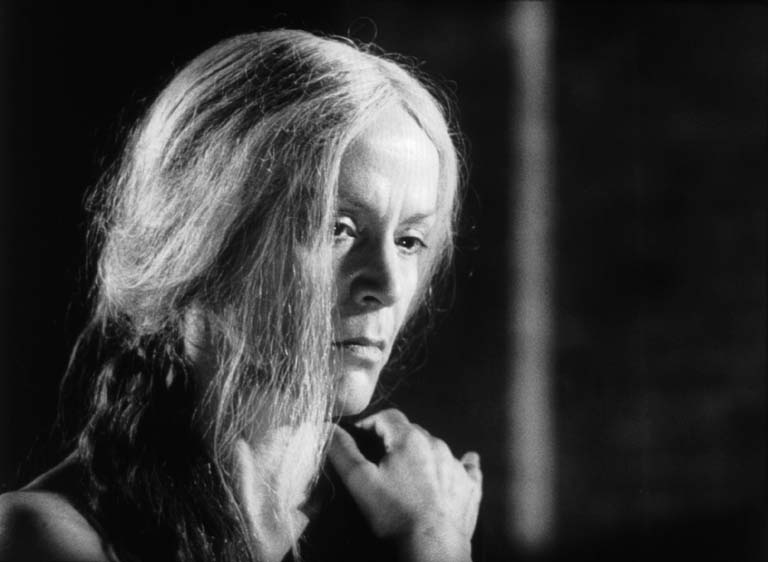
Inspired by the records of a trial for witchcraft, Gostanza da Libbiano won Benvenuti unanimous critical accolades and comparisons with Dreyer and Bresson. Originally, Benvenuti intended to direct Gostanza right after Confortorio (1992), in order to complete a trilogy he began with Judas’ Kiss (1983). Just like in a triptych, Judas’ Kiss stands as the central piece, presenting Christ’s words and project, while the two following features play as the side pieces, displaying the aberrations that the Church made in the name of Christ, once it established itself as a temporal power. While in Confortorio the enemies the Church fights against are the Jews, Gostanza provides a topical example of how women have been victimized through the centuries in the name of religion. But whereas Confortorio ends in an execution that becomes a (tragic) triumph, the eventual fate of Gostanza proves even more dreadful than death itself. Thanks to Benvenuti’s rigorous composition of frames (inspired by Mannerist painter Bronzino), to the enchanting black-and-white cinematography and to the unforgettable performance by Lucia Poli, Gostanza da Libbiano ranks among the best Italian films of the decade. After winning the Special Jury Prize at Locarno International Film Festival, it was Benvenuti’s first film to receive a real, albeit limited, theatrical release in Italy.
Film details
- Country of production
- Italy
- Year
- 2000
- Festival edition
- IFFR 2009
- Length
- 87'
- Medium/Format
- 35mm