“Art and cinema must face us with the unknown”: João Nicolau on the IFFR 2026 opening film
Setting this edition of IFFR in motion, Providence and the Guitar draws on a 19th-century fable to offer a hearty dose of wisdom, romance and charm that will carry its audience into the rest of the festival with a swing in their step. We spoke to its Portuguese director João Nicolau on how pleasure and play drove the process for his fourth feature, seeping magnificently onto the screen for our opening night film.
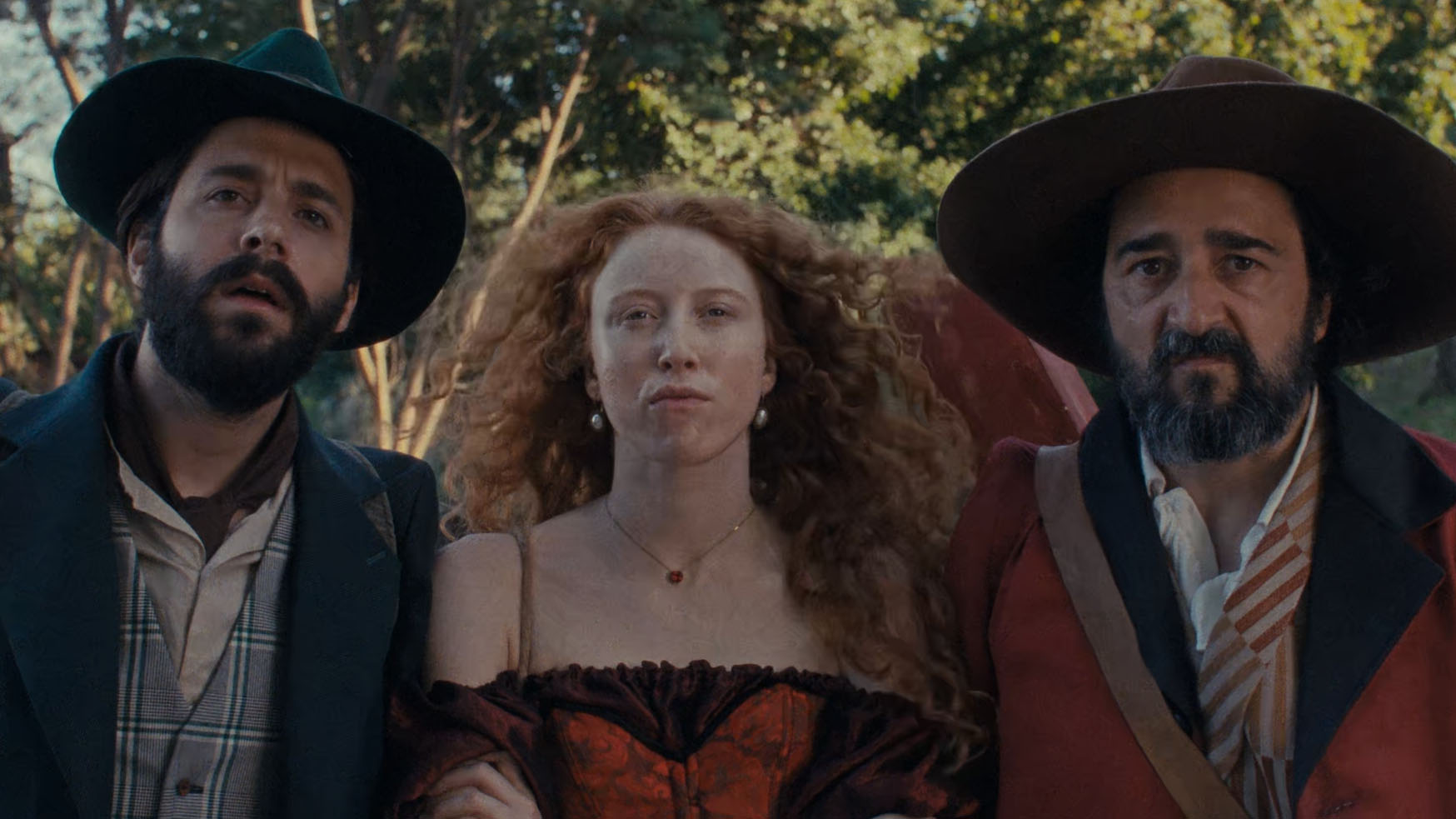
Scottish author Robert Louis Stevenson – of Treasure Island and Dr Jekyll and Mr Hyde fame – first published Providence and the Guitar in 1878 as part of his New Arabian Nights collection. Nicolau and his co-writer, and sister, Mariana Ricardo encountered the story when researching a previous film, but found themselves charmed by its main character Léon Berthelini who they felt needed his own film.
“He was so complete, in every aspect of the human spirit. He’s very talkative, he would use three sentences just to say thank you – that’s the kind of playfulness that really attracted me.”
Berthelini and his wife Elvira are the loveable couple at the heart of this (mostly) period story – performers deeply in love and travelling from village to village with their art, delighting audiences with their acting and singing. Charmingly portrayed by Pedro Inês and Clara Riedenstein, the pair’s spirited attempts to stage their performance in a local bar come up against the scorn of the small town official, rival performers, and, adding a touch of Portuguese folklore, cheeky red-eyed demons.
Nicolau chooses a musical metaphor to describe the mood he strove for in the film. “I tried to create a tone like a divertimento in classical music – a light ensemble piece – to reach a point of enchantment.” With gorgeous warm tones and period costumes, the couple’s love, resolve and the songs they burst into conjure much of this atmosphere.
“In Portugal, like the Berthelinis, we have to do it all: set up the stage, put up the posters, find an audience.”
Adding star power to the mix is Portuguese singer Salvador Sobral in his acting debut. “I already knew him, we are friends”, says Nicolau. “He said to me that he would like to try to challenge himself to be in a film.” It’s ironic, then, that he plays the quieter, restrained economist Stubbs. “Salvador is totally the opposite, he’s moving around all the time.”
It’s Sobral’s character that brings the moral bite to the film. Torn between a prospective career in finance and his more creative talents, he becomes the lens for the film’s timeless plea for the importance of art. In a number of scenes, we are transported to the present day – “a flashback, but to the future” – as the echoes of their artistic tribulations reverberate into present day struggles.
“In Portugal, like the Berthelinis, we have to do it all: set up the stage, put up the posters, find an audience”, says Nicolau of the filmmaking pursuit. “But actually, that’s what I enjoy in filmmaking. I enjoy discovering the film in real time, while we are making it. There was pleasure all over the process – I couldn’t do it any other way.”
Will the moral of this opening night tale echo across IFFR 2026? “We need to preserve the diversity of films. Art and cinema must face us with the unknown. That would be my wish for the festival audience – to embrace that encounter, even if it demands an effort to get out of our comfort zone.”
– by Fraser White
A list with articles
-
IFFR-supported films at the 70th BFI London Film Festival
Published on:-
CineMart
-
Hubert Bals Fund
-
IFFR Pro
-
Stories
-
Tips
-
-
Hubert Bals Fund announces HBF+Europe: Post-production Support selection 2026
Published on:-
Hubert Bals Fund
-
News
-
-