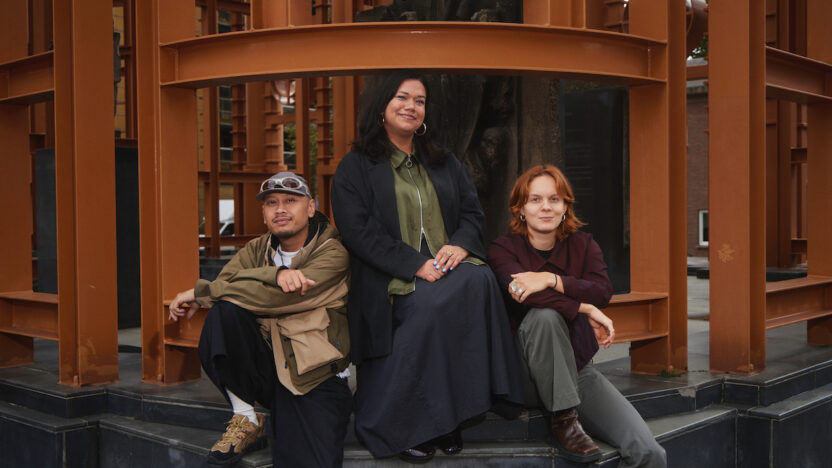
In memory of Dicky Parlevliet (1947–2026)
On 5 August 2026, Dicky Parlevliet – four-decade-long IFFR colleague, mentor and driving force – passed away peacefully at her beloved Monteillet, surrounded by her loved ones and animals. Mieke van der Linden pays tribute to her great film companion.
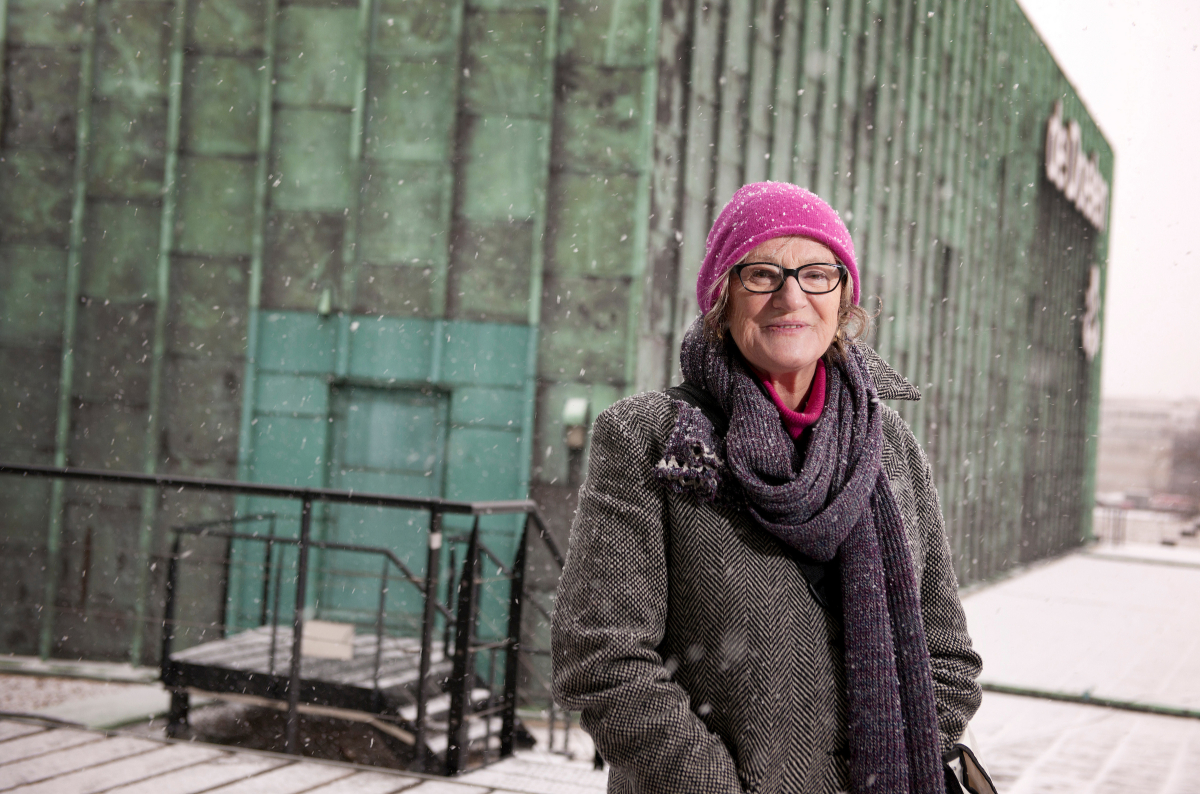
“Sometimes, when I read a script or watch a film now, I wonder what Dicky would have to say about it.”
When I started as a volunteer at Film International in 1987, I didn’t have a clue. Yet, after a brief conversation with Hubert Bals, I found myself managing the small basement screening room at the Lumière cinema on Kruiskade – just a short walk from the IFFR office.
They were extraordinary times in 1980s Rotterdam, when everything surrounding the festival seemed to be blending into each other, and creativity and curiosity were key. For 10 days, the Hilton Hotel served as the bustling headquarters for the greatest declaration of love for independent cinema that the Netherlands – and perhaps even the world – had ever seen.
It was an event the whole of Rotterdam eagerly anticipated every year. A time when you might casually grab a beer with directors and actors at the Lantaren Venster bar or attend a debate at Blijdorp Zoo. It was the cultural highlight of a year that had only just begun. Or, to quote a visitor from those early days: “It broke the winter spell. After the ordeal of Christmas and New Year’s, suddenly it was almost 25 January, and the great 10-day film feast was about to start!”
Every evening at the pop-up Hilton hangout, Bals – who would be there enjoying drinks with his international cinema pals – would invariably ask what you had seen that day. It was also the place where, one evening in 1987, Adriaan van Dis’s legendary VPRO talk show was hilariously hijacked live by Italian comedian Roberto Benigni, right in front of the entire Dutch television-viewing audience.
Rolodex
I soon realised that this unconventional director had a pillar of support in Dicky Parlevliet. It was not Bals – who was constantly travelling – but his assistant Dicky who became my mentor. And much more than that. When I saw her moving through the festival offices on my first day alongside Head of Guest Services Marijke van Lubeck, I decided that Dicky would be my primary source of information – and, in time, my movie-comrade.
I quickly understood that she was the power behind the throne, possessing a Rolodex worth killing for. Full of the names and numbers of international directors, producers and writers – people she would call without hesitation in perfect French, English or German, firmly negotiating with them all the while.
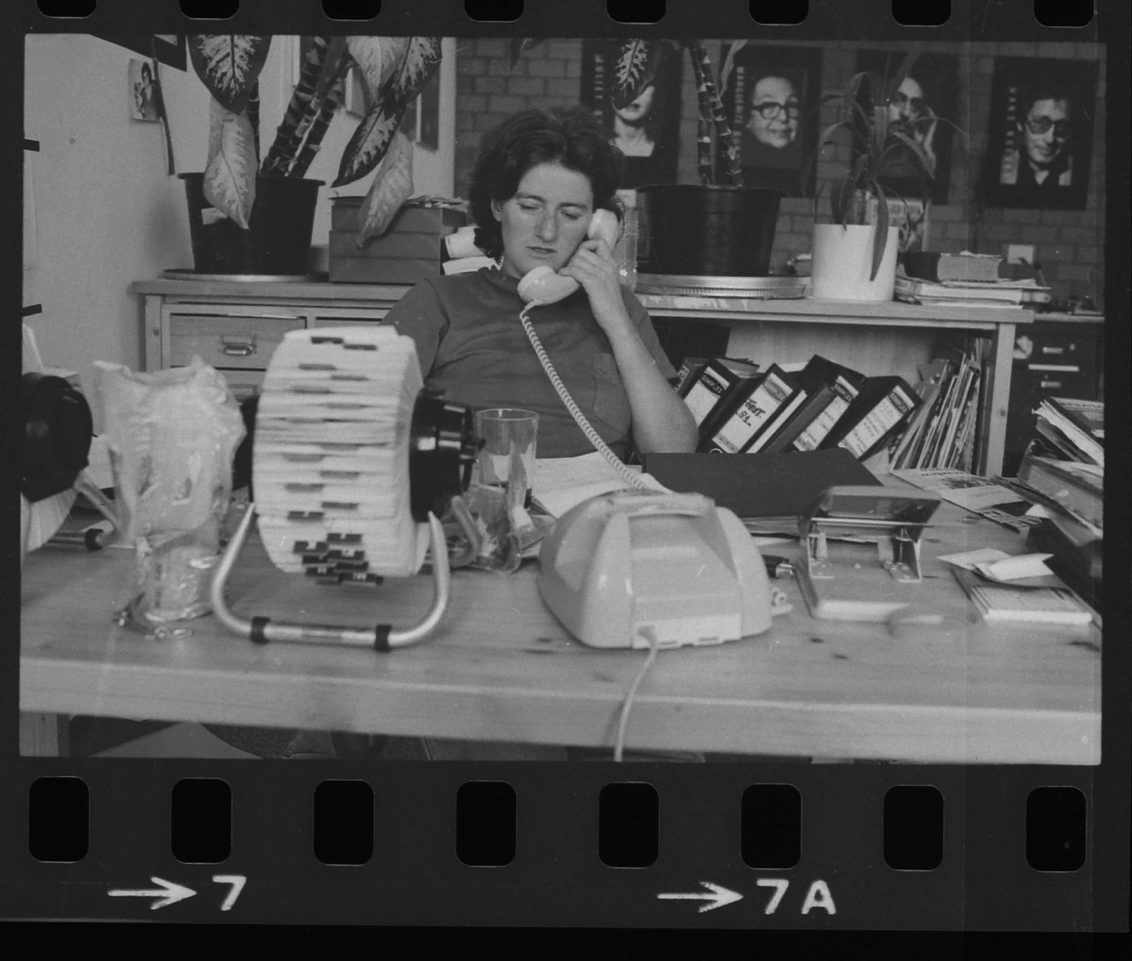
This was also a time when the borders of China and the Soviet Union were still firmly closed, yet Bals somehow managed to smuggle films from these unknown territories to the festival. In those days, it often fell to Dicky to pry the film reels loose from customs at Schiphol Airport. She also didn’t shy away from picking up stranded guests in her own car during severe weather – even when the festival’s own car service refused to make the trip. “She was fearless; I once drove with her through a massive snowstorm to Schiphol – at a snail’s pace, mind you – but we did pick up the guests”, recalls producer and friend Marietta de Vries, who had just started working at the film festival.
Parajanov
A major event in 1988 was the visit to Rotterdam by Georgian filmmaker Sergej Parajanov, a trip Dicky coordinated alongside Bals. It was Parajanov’s first international journey after spending years in a Soviet penal colony.
The film festival named him one of the 20 “Directors of the Future.” The list also included Jim Jarmusch, Wim Wenders and Martin Scorsese, among others.
Zwanen
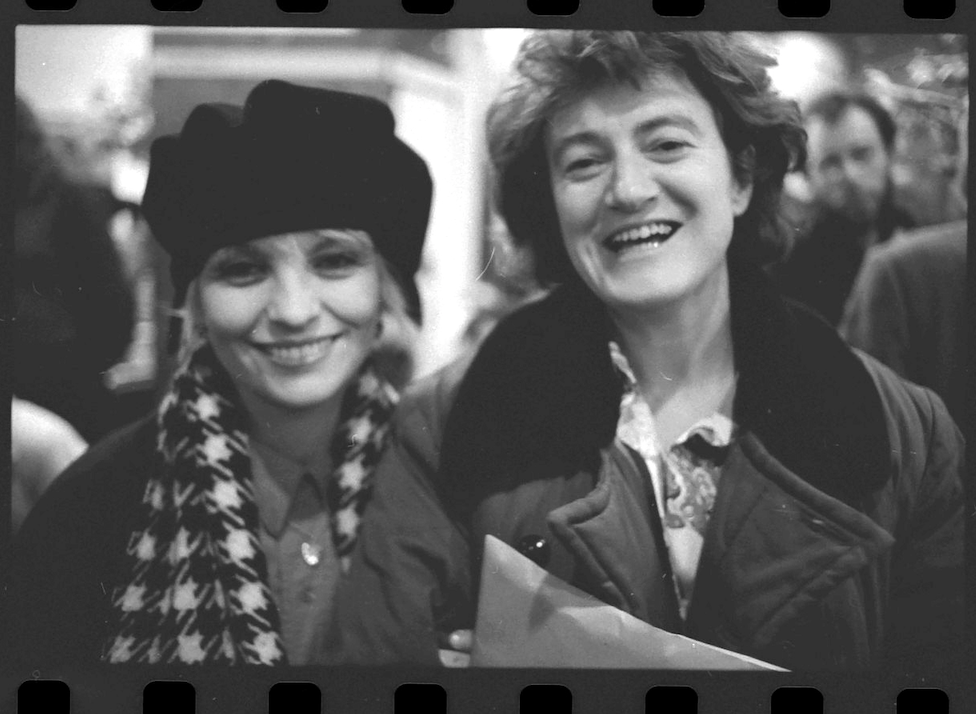
When Huub Bals passed away suddenly in July 1988 and Anne Head stepped in as interim director for the 1989 edition, Dicky and I became close friends. By then, I was working in the press department of Film International, and together we founded the “Meisjes Vereniging Zwaan Kleef Aan” – a club of spirited, cheerful women working in film and the arts. We came up with the most hilarious and absurd gatherings together. The “Swans” were famous and notorious in those days, invariably arriving en masse at every film festival event.
That same year, we were asked to escort guests of honour Joris Ivens and Marceline Loridan for a week. Ivens opened the 1989 film festival with Une Histoire de Vent – the final film he made with Loridan – in the presence of Queen Beatrix.
When Ivens received a royal honour that afternoon – Knight of the Order of the Netherlands Lion – from Minister Brinkman, the filmmaker’s rehabilitation was complete. Dicky and I had the best week ever with this remarkable couple. We served them jenever and herring in their hotel room, took turns wearing the royal decoration as an earring and kept intrusive journalists at bay – except for a girl from a local school newspaper and a young guy from MTV. The couple was happy to speak to them. Later that year, we visited Joris and Marceline at their home on the Rue de Saint-Pères in Paris for another wonderful get-together.
Stardust
In the early 1990s, Dicky moved to broadcaster VPRO but remained closely connected to IFFR. She worked on the film programme “Stardust” with colleagues such as Karen de Bok; the show was broadcast live from the Rotterdam film festival. Dicky was a brilliant researcher who managed to get absolutely everyone in front of the camera. For the TV programme “Roerend Goed”, she managed to secure, among others, Thelma Schoonmaker – Martin Scorsese’s editor.
Also notable was the documentary series about writer Jan Wolkers, Een oceaan van hoop (1994), in which she was closely involved.
Rejection pile
It was during the early noughties when Director Sandra den Hamer – much to the delight of the entire IFFR team – asked Dicky to return to Rotterdam. She came back as a researcher and advisor for the Hubert Bals Fund, with France as her programming territory. She became a key point of contact, supporter of new talent and an informal leader. She knew better than anyone how to remain calm when tempers flared during programming meetings.
Edwin Carels, former programmer for sections such as Exploding Cinema and Art Directions, puts it well: “For me, Dicky was a tremendous source of support in the struggle to create unconventional programmes and keep the spirit of IFFR adventurous.”
We learned a great deal from her – for instance, how to look at films. As Nik Montaldi (of IFFR and the Venice Film Festival) recalls: “What I took away from my conversations with her was the lesson never to take things for granted. She loved rescuing films from the ‘rejection pile’ – some of which turned out to be real gems. That approach has always stayed with me. Sometimes, when I read a project proposal or watch a film now, I wonder what Dicky would say about it. I cherish that memory of her.”
Late night
In 2003, journalist and performer Wilfried de Jong was approached to host a daily IFFR late-night talk show, with Dicky and me doing the editorial side. During the popular “directors’ drinks” at de Doelen, we would hunt for interesting guests together – and we almost always struck gold. After a tentative start, the atmosphere in the Kleine Zaal of the Rotterdamse Schouwburg soon began to buzz with energy. The hall filled up more and more each night, and Late Night became a wonderful mix of high and low culture, with international and local luminaries joining the conversation. We were absolutely thrilled back then when Paul T. Anderson turned out to be a fan of our rather ironic daily movie quiz and joined to go dancing with us at the after-parties at the then-popular dance venue Off Corso.
Dicky Night
In 2010, Dicky said goodbye to IFFR to head off to her beloved mountain in the Ardèche. Even after leaving, she remained connected to the Hubert Bals Fund for several years as a reader and advisor. She is perhaps one of the few people to have had a professional relationship with every single director, right up to the current Festival Director, Vanja Kaludjercic.
To mark her departure, we organised “Dicky Night” for her. Managing Director Janneke Staarink arranged a vacant, run-down Chinese restaurant on the ground floor of de Doelen as the party venue. It was a night to remember, attended by just about everyone who loved Dicky – each bringing a favourite book for her.
“I gave her Owl at Home, a children’s book by Arnold Lobel with beautiful, slightly gothic-style illustrations – it was perfect for her; the owl drank ‘tear-water tea,’ among other things,” recounts IFFR researcher Robert de Rek. In France, a carpenter built a special cabinet for the more than 50 favourite books she was given.
After a lovely speech by the then-IFFR Director Rutger Wolfson, we danced on the tables until deep into the night.
The joint present we gave her was a telescope because Dicky loved not only the stars of the silver screen but also the real ones high up in the skies. Whenever I visited her on the mountain in the Ardèche, we would often lie outside in the grass at night, gazing at the Milky Way and the moon. Yet, in her cave like bathroom, there also hung a portrait of 1930s heartthrob Clark Gable.
– by Mieke van der Linden
A list with articles
-
IFFR-supported films at the 70th BFI London Film Festival
Published on:-
CineMart
-
Hubert Bals Fund
-
IFFR Pro
-
Stories
-
Tips
-
-
Hubert Bals Fund announces HBF+Europe: Post-production Support selection 2026
Published on:-
Hubert Bals Fund
-
News
-
-