From Rotterdam to Rijeka: Igor Bezinović on the journey of Tiger-winner Fiume o Morte!
Nominated for the European Film Awards 2026 for Best European Film and Best European Documentary, director Igor Bezinović reflects on how IFFR and the Tiger Award shaped the journey of Fiume o Morte! – from its first festival screenings to international recognition.
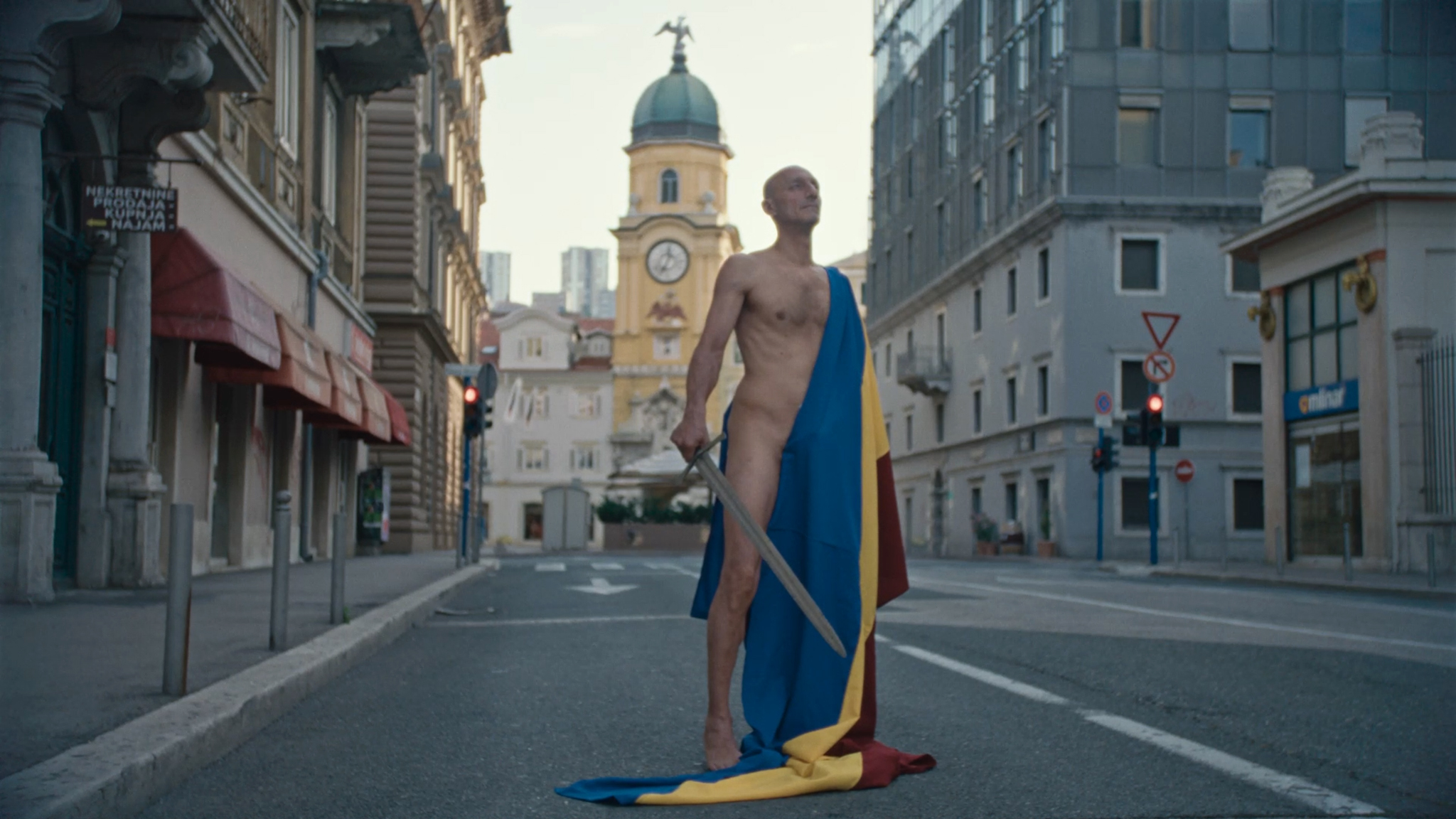
A witty and formally inventive exploration of the line between history and fiction in documentary, the film revisits a singular episode in early 20th-century Italian and Croatian history: the protofascist occupation of Fiume – today’s Rijeka – by poet Gabriele D’Annunzio. Beginning in 1919, D’Annunzio ruled the city as a stage for nationalist spectacle, an episode whose absurdity and resonance continue to shape Rijeka’s collective memory.
“I knew I was not going to do it in a classical way, because I have never done any film in a classical way.”
The film moves fluidly between contemporary interviews, archival photographs and carefully staged reenactments, often comical clashes between past and present. From the outset, Bezinović knew the project would not follow a classical documentary approach. “I knew I was not going to do it in a classical way, because I have never done any film in a classical way,” he explains. Tableau-like scenes echo historical imagery, blurring the line between documentation and performance. “Having this unlimited space of opportunity in the filmmaking style is something that excites me,” Bezinović adds.
“There was a lot of trust and friendship involved, and I think that is also visible in the film.”
Bezinović reflects on the film’s world premiere at IFFR 2025: “We are proud that the path started publicly in this way – IFFR feels like home to me”. Fiume o Morte! is not his first appearance at the festival, in 2017 his coming of age feature A Brief Excursion screened in the Bright Future section.
“Without a doubt, the premiere and the Tiger Award opened many doors for the film.” Since then, the film has had an outstanding international trajectory, including its selection for New Directors/New Films at MoMA, its screening as the closing film of Zabaltegi – Tabakalera, the San Sebastian Film Festival’s most wide-ranging competitive section – and its selection as Croatia’s official submission for the 2026 Academy Awards. The film’s extensive journey shows the film’s widespread resonance as audiences far and wide recognise the spectre of authoritarianism resurfacing from the past. As one of the film’s interviewees warns about the rising European fascism, “they’re still around today, unfortunately, we just don’t know who they are.”
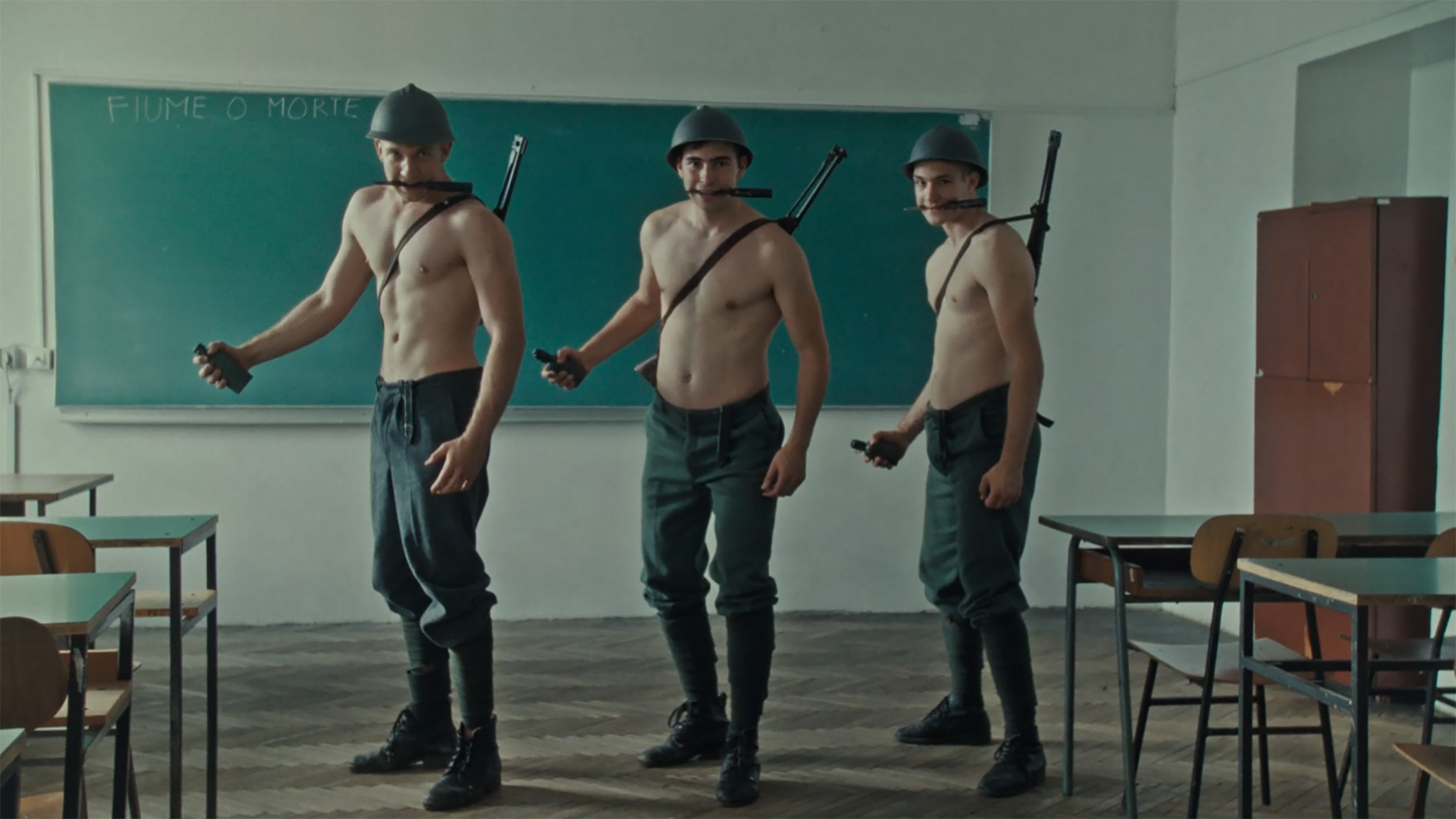
Central to Fiume o Morte! is its collaborative relationship with the city of Rijeka. Bezinović chose to tell the story through the voices of local residents, foregrounding perspectives often absent from official historical accounts. Casting began through a public call in local media, resulting in the participation of more than 300 Rijeka citizens. We see the locals embody historical figures and reenact events, with multiple performers taking on the role of D’Annunzio, each bringing their own lives and interpretation.
“As I was meeting people, I was trying to adapt the script to their talents and their needs,” Bezinović says. This approach fostered a strong bond of trust between the filmmaker and participants, a relationship that became central to the film’s production process and end result. “There was a lot of trust and friendship involved, and I think that is also visible in the film.”Rather than relying on a traditional voice-over, Fiume o Morte! gives the space to the people of Rijeka to narrate the story themselves, speaking in Fiumano and reinforcing the focus on language and identity. “The speakers of Fiumano decided to give me their trust, and to tell the story in the local dialect,” Bezinović says.
“Those are days I will remember for the rest of my life.”
The film’s reception mirrored the collective spirit that shaped the production. After receiving the Tiger Award in Rotterdam on 7 February, the film premiered in Rijeka the following day. Returning home, news of the award had already circulated widely and the city was already celebrating: “The whole city knew from local media that we had won the Tiger Award”. The Tiger Award became the perfect prelude to the premiere: “Even before seeing the film, people felt that the award belonged to them as well, which it does.”
Two screenings were held at the local arthouse cinema so that all participants could attend. Bezinović remembers the “fabulous” audience reaction. “People were laughing from beginning to end, commenting, pointing to friends, family members and acquaintances on screen.” Bezinović recalls the extraordinary energy in the room: “It felt more like taking part in a theatre performance than watching a film in a cinema.” He describes the days between the award ceremony in Rotterdam and his hometown premiere as unforgettable: “Those are days I will remember for the rest of my life.”
– by Paula Estany Hachuel
A list with articles
-
IFFR-supported films at the 70th BFI London Film Festival
Published on:-
CineMart
-
Hubert Bals Fund
-
IFFR Pro
-
Stories
-
Tips
-
-
Hubert Bals Fund announces HBF+Europe: Post-production Support selection 2026
Published on:-
Hubert Bals Fund
-
News
-
-