Skip to content
29 Jan – 8 Feb 2026

Fil Ieropoulos on his latest film Uchronia

Published on:

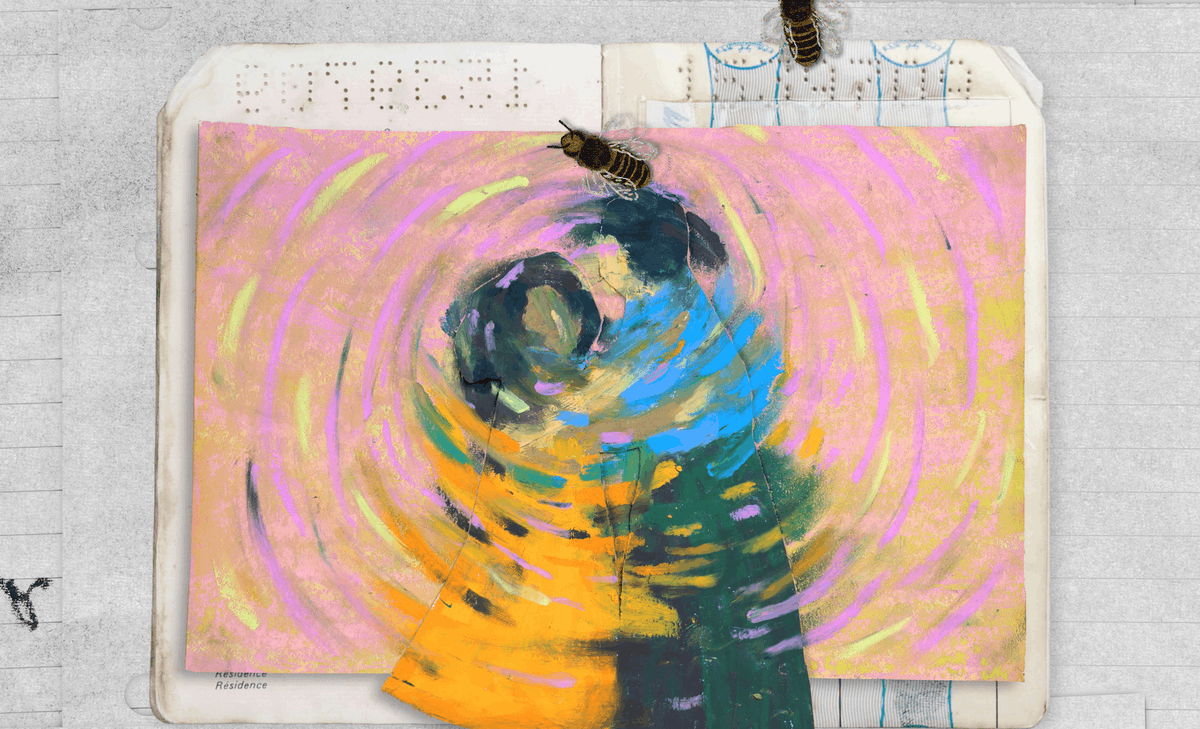
Fil Ieropoulos’s (Avant-Drag! IFFR 2024) hybrid feature Uchronia invokes the wild and restless spirit of Symbolist poet Arthur Rimbaud as it offers up a latter-day critique of identity, revolution and the role of the artistic avant-garde.

It is a film of glorious excess, characterised by a wanton curiosity and a vagabond unrest of style. All of which is quite deliberate on the part of the filmmaker, whose source material is Rimbaud’s equally restless poem-cum-manifesto Une Saison En Enfer.

“If you go back to the original poem, it broke, honestly, every single rule of poetry at the time,” Ieropoulos tells IFFR Pro. “Chapters were all over the place in terms of continuity. One was extremely long. Another was extremely short. He spent the first three quarters of the book without rhyming. And then suddenly, just before the end, he has a series of poems that rhyme. It just continuously breaks the language of his time. He was very aware that this is how we should look into a new world – by breaking language into a million bits.”

“And so that was one of the first decisions that we took, that in order to honour the work, we have to create something which is equally fragmented, and very iconoclastic and very beautiful.”

In the film, the ghost of Rimbaud wanders through history, meeting queer revolutionary figures such as Emma Goldman, David Wojnarowicz and Marsha P. Johnson, alongside better-known historical figures such as Leon Trotsky, Andy Warhol and Divine. The film presents a complex tapestry of encounters, speeches and statements that address the politics of identity as readily as the politics of power.

This approach was first deployed in Ieropoulos’s previous film Avant-Drag! in which a series of queer radical performers challenge conservative narratives of Greek society, even the increasingly conformist LGB community who no longer add a T to their identifying acronym, as well as the rise of the far right in Greece. Any recent advances within queer politics are being eroded, Ieropoulos argues.

“When we made that film, we made it very much with the intention to be a film for Greece, but actually the film was shown a lot internationally, so we had the opportunity to discuss this with a lot of different people around the world and find out that actually this is happening in a lot of places…It is actually a completely shared experience. We had a period in which a lot of identity politics rose, but now we’re retreating firmly to the other side, which reminds me, unfortunately, a little bit of 1920s to 1940s Germany. So it’s a very, very scary moment.”

Ieropoulos describes his teenage relationship with Rimbaud as one akin to the relationship that youths had with Kurt Cobain in the 1990s or with Patti Smith in the 70s. Cobain and Smith were also devotees of Rimbaud, he adds.

“I didn’t really understand it [Une Saison En Enfer] politically, to be honest. When you first go into it, it’s got this quality of being very radical, of course, but mostly you are taken by how free-floating and delirious it is,” he tells IFFR Pro. “And only recently, just a couple of years ago, I started reading it again because I was looking for something different.” In the second chapter, named Bad Blood, Rimbaud engaged with the subject of iniquitous and pervasive nationalism, Ieropoulos continues. “I saw that there was a line, ‘I have a horror for the homeland.’ We’re talking about a time when the idea of such nationalism was not even theoretically crystallised yet, [but] he could see that this could lead to something really bad.”

There have been precious few depictions of Rimbaud on-screen – a rare example being Agnieszka Holland’s Total Eclipse, which profiled his relationship with Paul Verlaine. Certainly, Ieropoulos cannot recall any adaptations of the poet’s magnum opus Une Saison En Enfer.

“Nobody has ever really tried to go into what the poem does, and to work with that, because the poem is so abstract and it’s so surreal and it’s so fragmented. If you are to be true to it, the film must be very strange. By being unconventional, we’re actually being more true to the original poem.”

Ieropoulos had a moment of epiphany – a “metaphysical thing,” he calls it – after the film was accepted as a work-in-progress for IFFR Pro 2026. “One night, I dreamt the whole film. I woke up and I wrote everything down. And then I started editing again. So from having spent three months editing the first half of the film, in the next two weeks, I had the next half of the film.” The original production timeline entailed a March 2026 delivery, but the film was more or less completed in November 2025, at which point Berlinale showed a strong interest. The film is selected for Berlin’s Forum Expanded section.

The filmmaker hopes that his film will play as radical counterpoint to the “safe” queer films that he believes programmers are, in the main, more drawn towards.

“I think that it’s good for us to go and push the agenda a little bit at Berlinale, because in recent years, I’ve seen many queer films and everything seemed awfully mainstream to me,” Ieropoulos says of his ambitions for the film. “My background is experimental, avant-garde, queer cinema from the 60s and the 70s, and so on. This is the stuff I studied and the stuff I enjoy. This kind of coming-of-age, heart-warming queer stuff that has been happening in the last 20 years, I’m not really fond of that. And I don’t just say it in terms of personal reference. I actually see it in political terms. I think making these kinds of very normal queer films has actually diluted the vision of what queer cinema could be, and how we should be pushing the envelope of mainstream cinema.”

“I think, as an industry, we shouldn’t be afraid to do more risky things.”

Had timings been different, Ieropoulos would have launched Uchronia at IFFR, he notes. “I consider myself to be a true IFFR alumni filmmaker – I feel it is one of the festivals that support experimentation. My previous film, Avant-Drag!, premiered at IFFR, and the audience loved it. We had a great time. Major film festivals are increasingly risk averse these days, much more than they were in the 80s and 90s. That said, we are very happy to be at Forum Expanded, the most daring section of the whole of the Berlinale. The programmers of this section are really trying to bring about change.”

“I think, as an industry, we shouldn’t be afraid to do more risky things. At the end of the day, there are so many non-risky films, even queer non-risky films nowadays. For every strange film that we make, there are probably a hundred standard, linear films.”

It is a situation that filmmakers and festivals alike should continually be wary of, and should challenge, Ieropoulos signs off.

-by Nick Cunningham

A list with articles