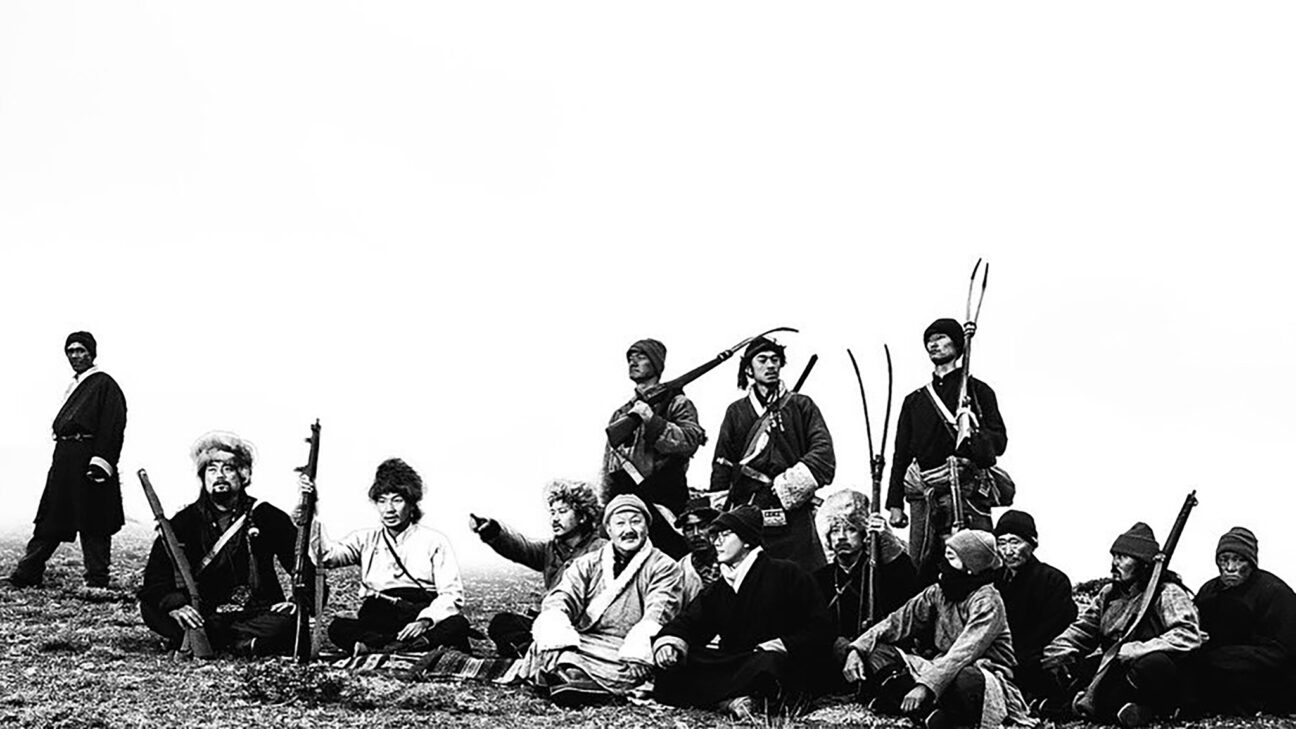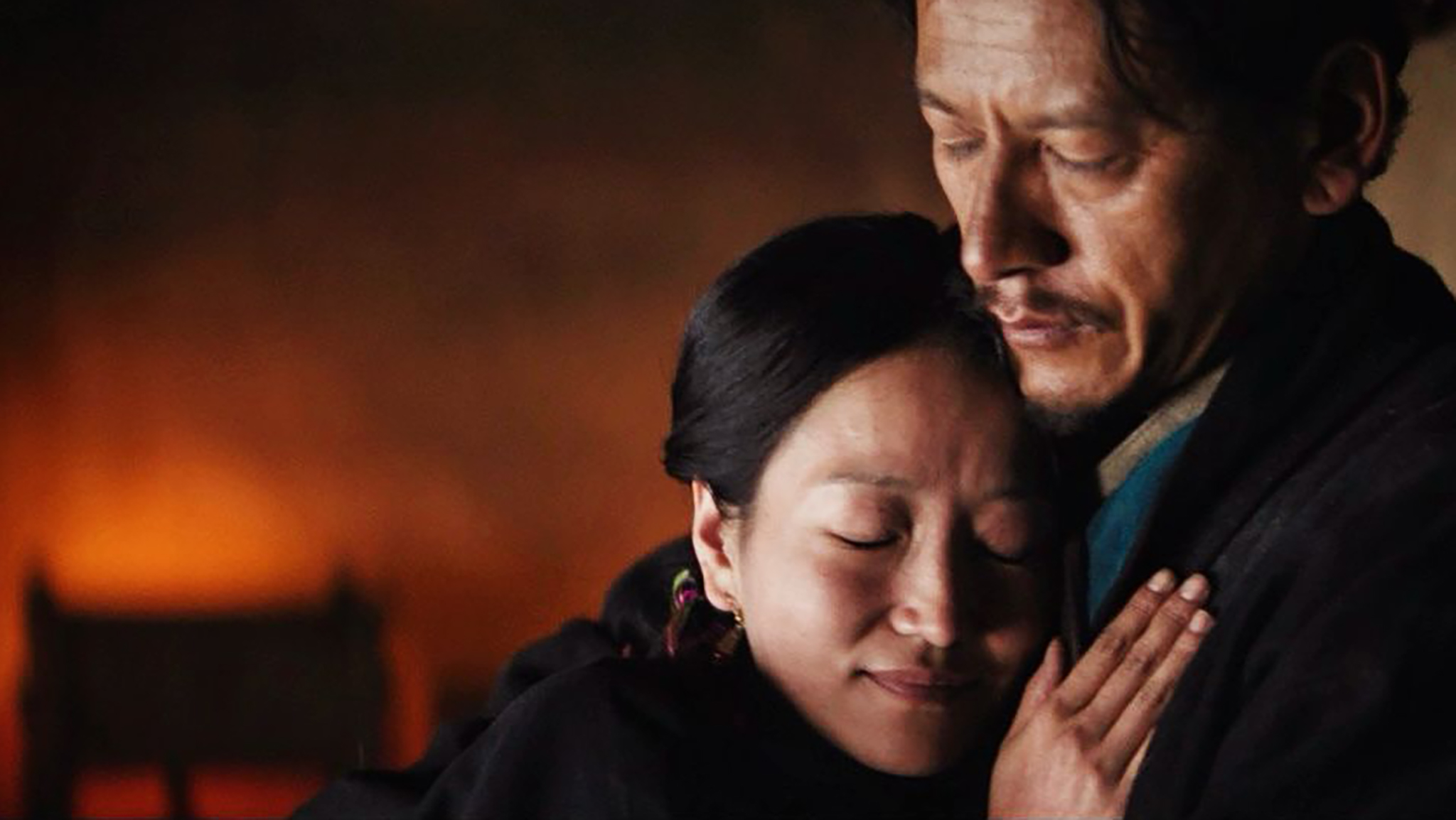
When the People’s Liberation Army sweeps over Tibet, slaughtering monks and crushing dissent, Gonpo Tashi assembles a band of men to mount an armed resistance. Four Rivers Six Ranges recasts Tibetan nationalism in a militant avatar, offering a high-octane period actioner with contemporary resonance.
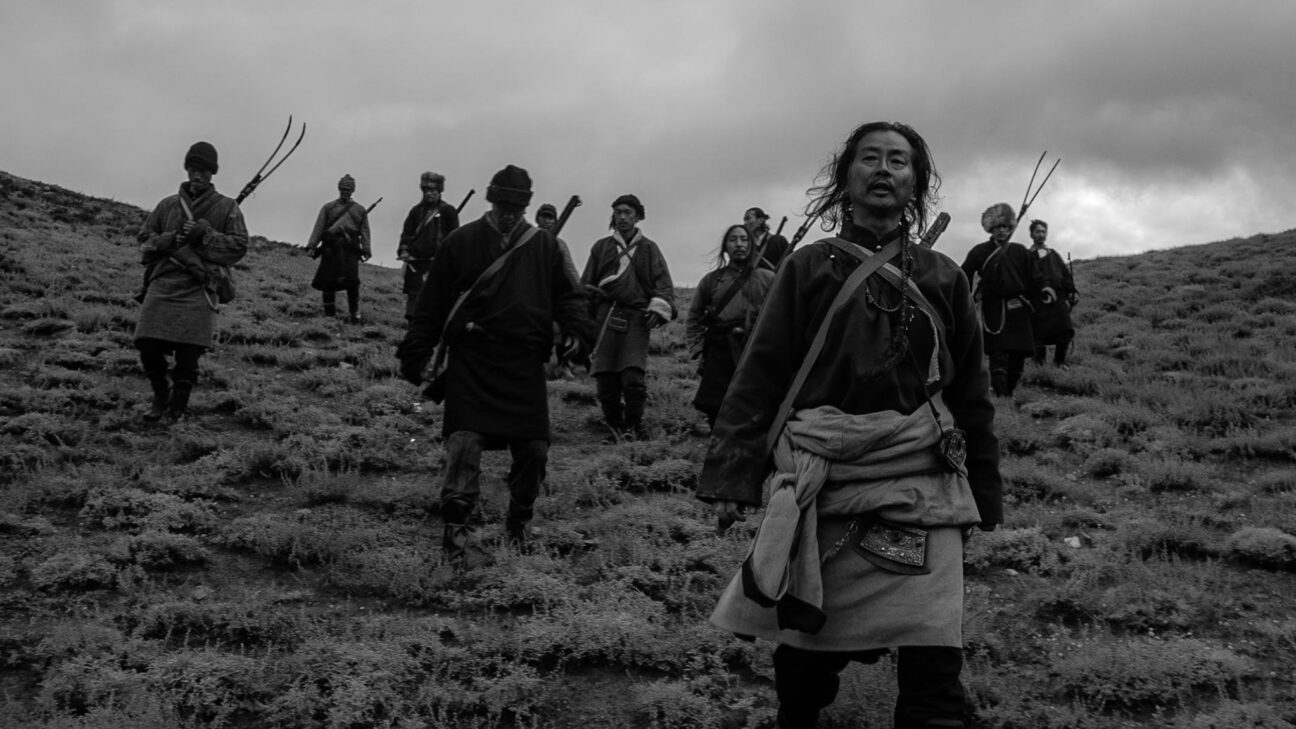
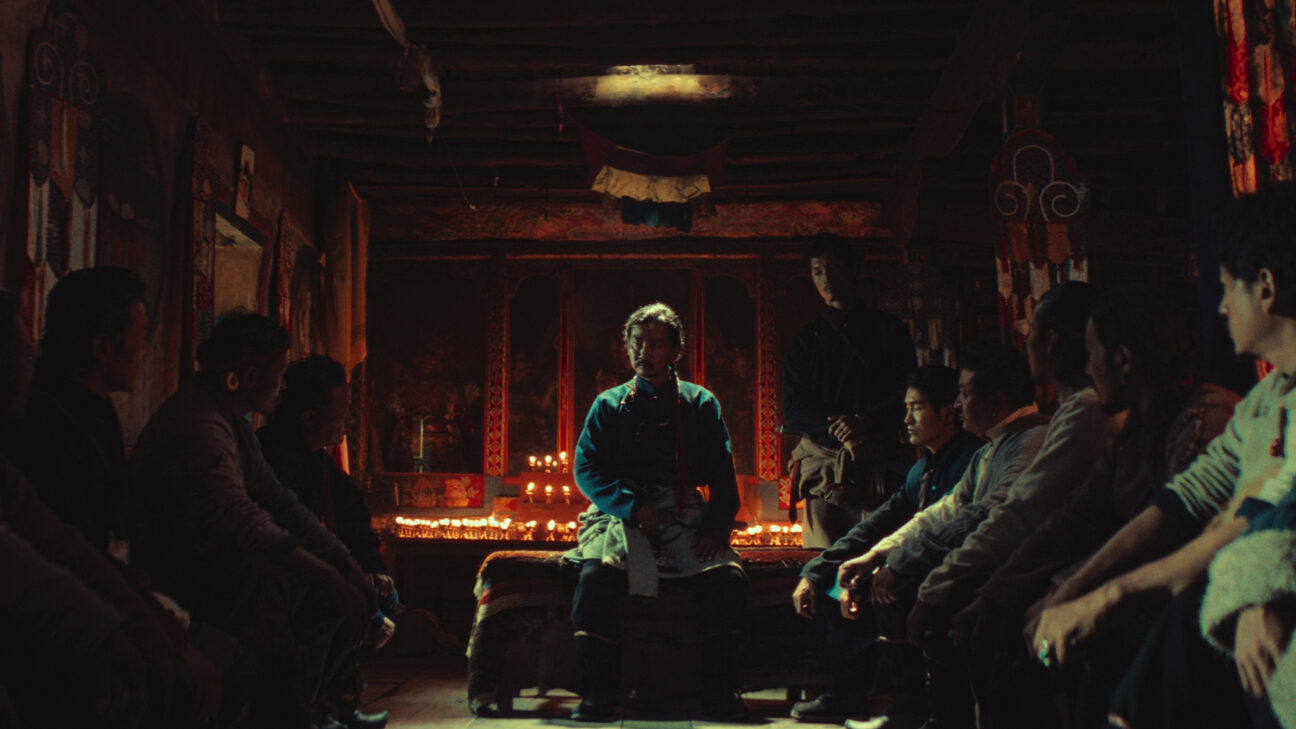
“Our land, our religion, our culture and our precious Dalai Lama are all in grave danger”, warns Gonpo Tashi before an assembly of armed volunteers from across Tibet. The year is 1958, and the People’s Liberation Army has tightened its grip over the region, quelling protests and raiding monasteries under the ruthless command of General Tan. Disregarding the admonitions of the collaborationist government, Gonpo Tashi and his men set out to defend their nation, convinced that freedom can only flourish at the barrel of a gun.
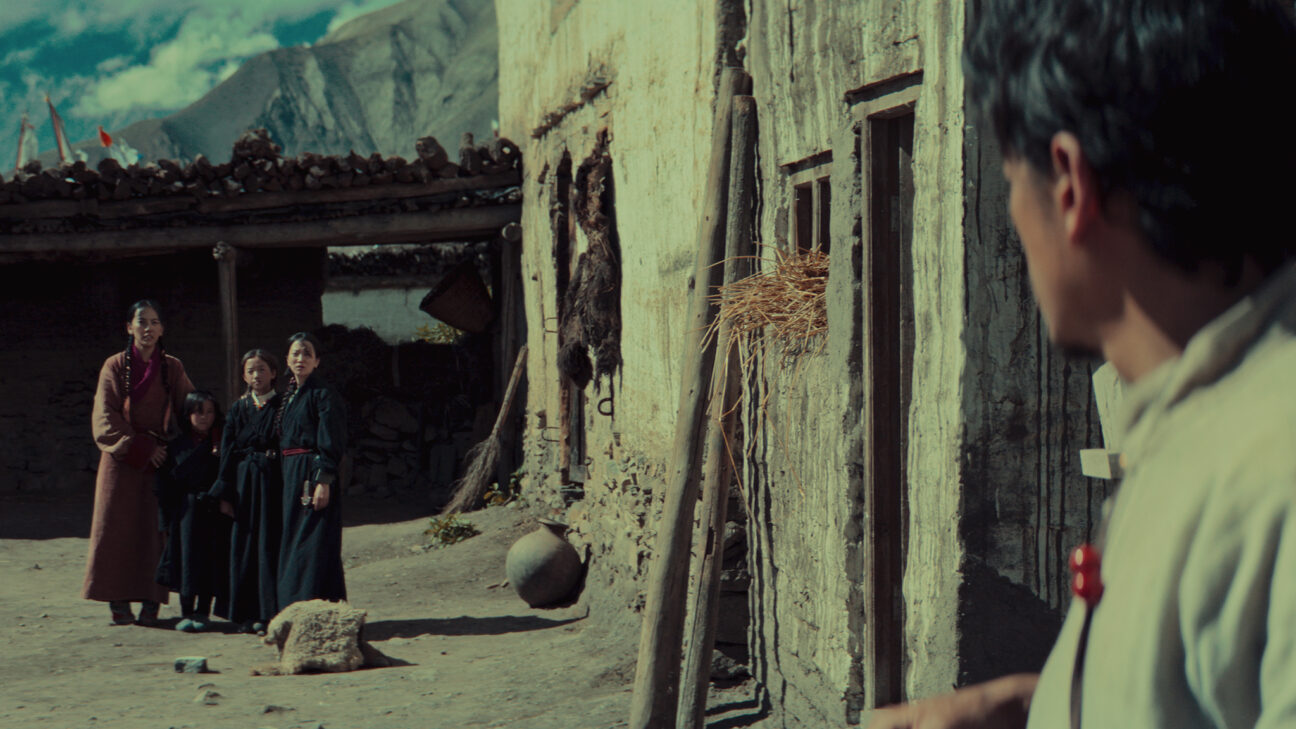
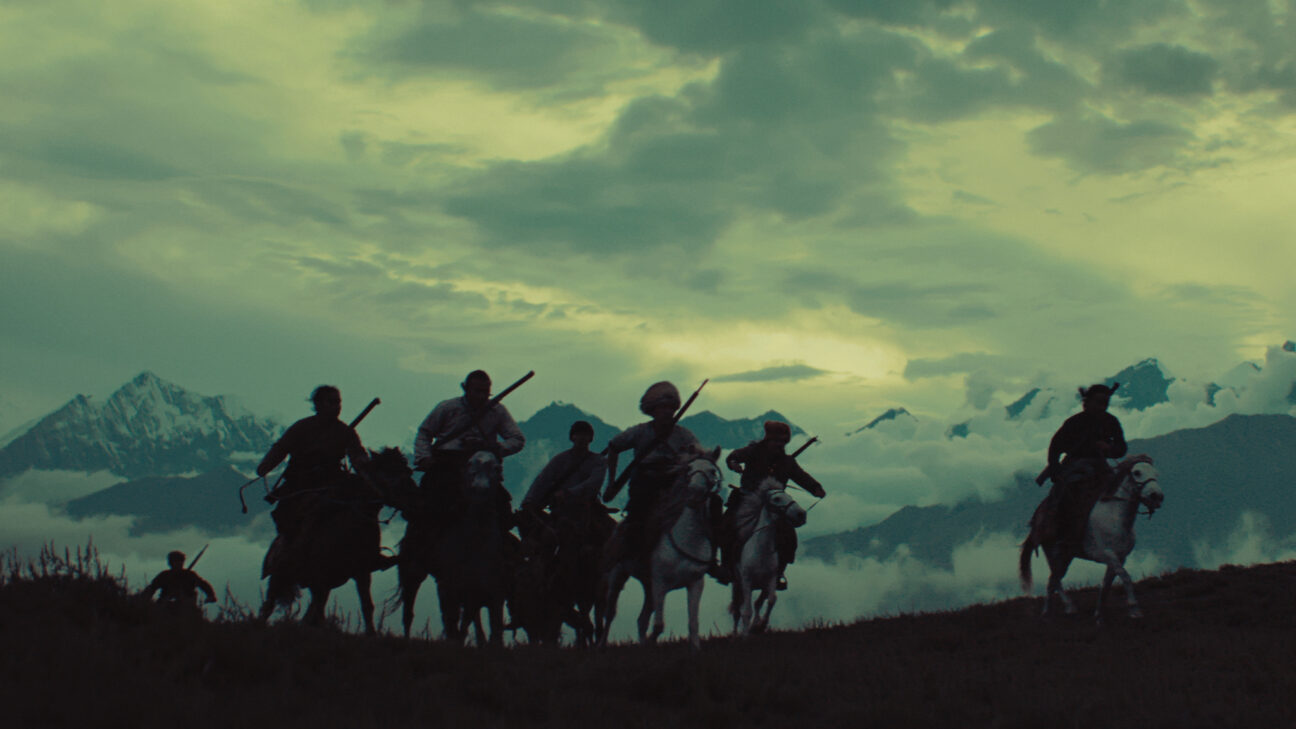
Where Tibetan nationalist sentiment has predominantly been viewed onscreen through the lens of exile and suffering, Shenpenn Khymsar’s propulsive historical actioner Four Rivers Six Ranges presents it in a defiantly militant, assertive form. This is a work where monks trade their red robes for rifles and whose noble values are those of the battlefield: valour, courage, solidarity and dedication to a cause. With its muscular widescreen cinematography, spectacular high-altitude action set pieces, throbbing bass-driven score, and whiplash-like dialogue, Khymsar’s English-language film possesses the texture and sweep of a prestigious Hollywood Western. Yet, this is not an ode to frontier adventurism, but a ballad of resistance, a sweet song of independence.
– Srikanth Srinivasan
Trailer
This content is available after accepting the marketing cookies.
Film details
- Countries of production
- India, Nepal, Canada
- Year
- 2025
- Festival edition
- IFFR 2025
- Length
- 132'
- Medium/Format
- DCP