

Short Profile: Jeanne Faust
As a photographer and film maker, Jeanne Faust has veered for years between the visual arts and film. All her works play with our patterns of expectation, playing on our habituation with stories told in film images. Her small-scale very meticulously portrayed stories are not really stories at all – they only become so through what we suspect and fill in as viewers. Occasionally the short films look like poems, in which the white lines say as much as the text.
In almost every film by Faust there is some kind of small about-turn. The interviewed film star reverses the roles and starts interrogating the interviewer, the hands on screen follow the instructions we hear off screen, or the action is shown twice from different angles.
Asking people to act out their actions in front of the camera one more time, the way Faust does repetitively, makes it clear just how great our desire to continue to believe that what the camera records is ‘real’. Authenticity is so important that viewer almost automatically switches off his critical capacities for it.
Of the three directors we focus on in the Rotterdam Short Profiles, Jeanne Faust could be described as the most conceptual. Her subject is cinema and its conventions. But to make us take a good look at them, she doesn’t need quotes or references – she creates brand new images.
Jeanne Faust (Wiesbaden, 1968) studied at art academy in Hamburg. She lives and works in different places in the world, but has her basis in Hamburg. Her work has been seen in recent years in the Ludwig Museum in Cologne, during Manifesta 4 in Frankfurt and at the last Biennial in São Paulo.
In this combined programme
-
-
-
-
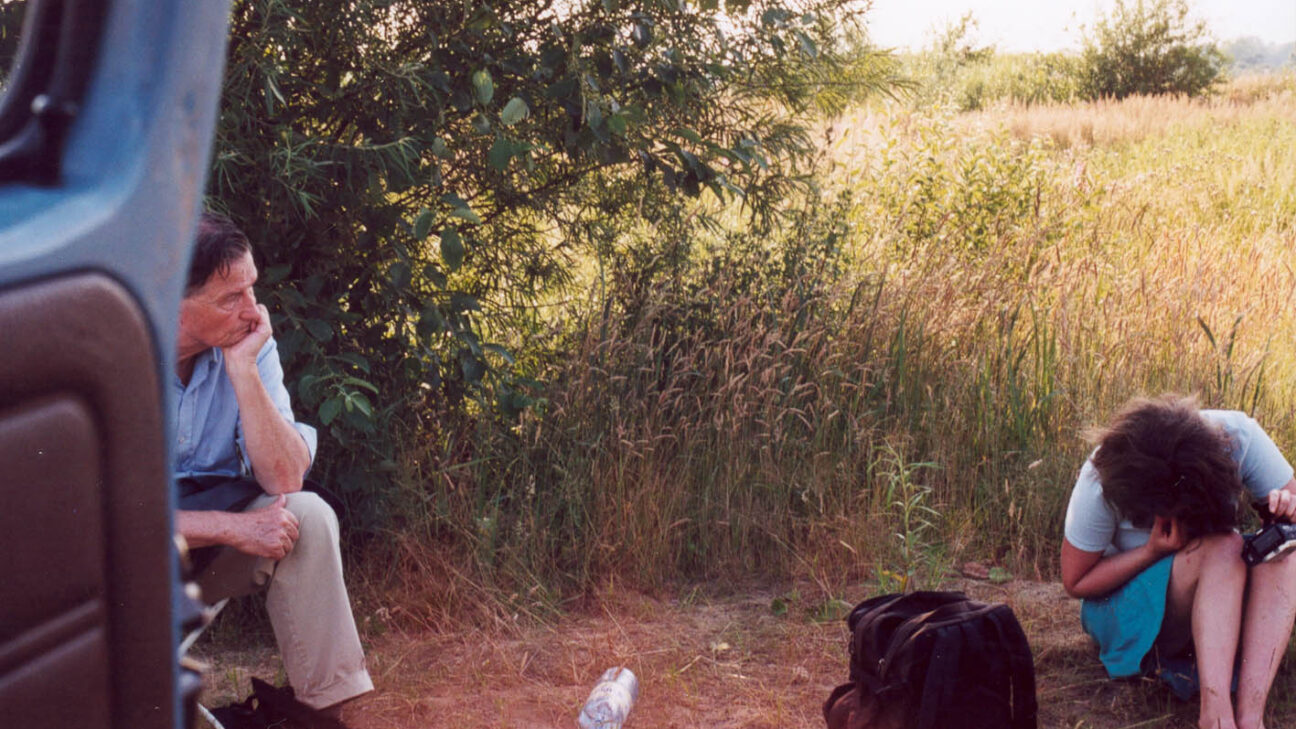
My Own Private Satellite
In a lifeless outer suburb, the inhabitants live out their routine. Played by the inhabitants themselves. -
-
-


