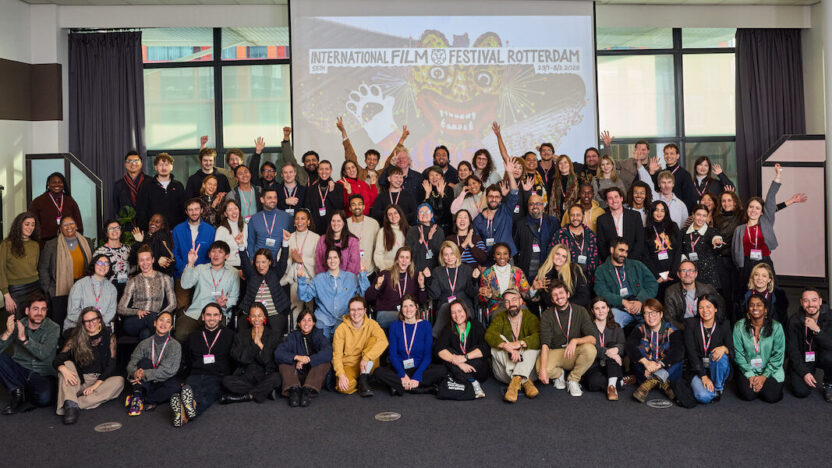
Abinash Bikram Shah on his Un Certain Regard-winning Elephants in the Fog
At Cannes 2026, Abinash Bikram Shah was awarded the Jury Prize in Un Certain Regard for his debut feature Elephants in the Fog, a film that received significant development and co-production backing via IFFR funding initiatives. The Nepalese filmmaker talks to IFFR about how Hubert Bals Fund (HBF) funding was instrumental in getting the work to screen.
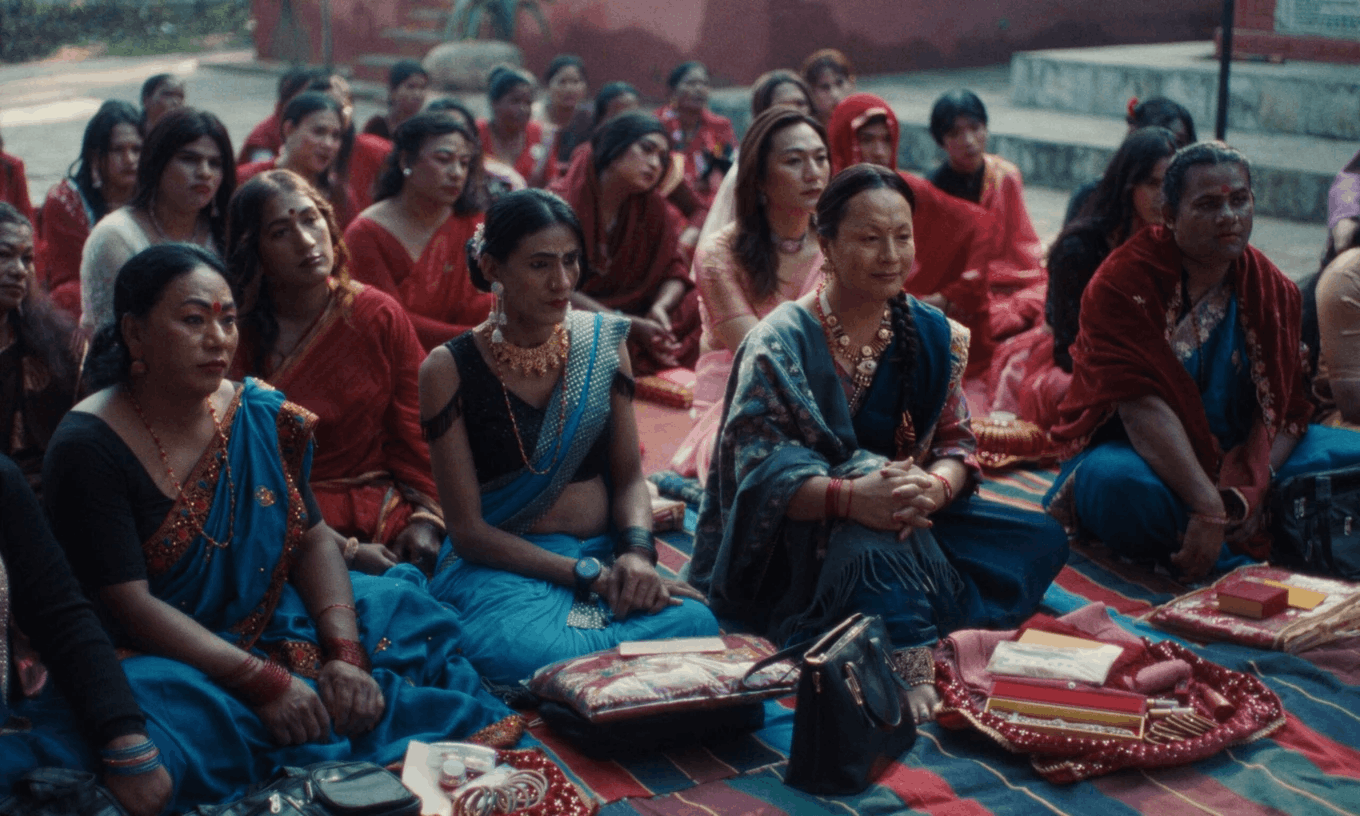
Abinash Bikram Shah’s feature debut Elephants in the Fog comprises a delicious assault on the senses as he tells the fabulist tale of Nepal’s third-gender Kinnar women, a community revered for their ability to bestow blessings, but also feared for their power to invoke curses.
In the film, wild elephants emerge from the forest each night. As the villagers take turns to patrol and protect their fields and homes, matriarch Pirati volunteers one of her own Kinnar members for every watch.
But Pirati bears a secret. Despite having taken a vow of celibacy, she is in love with a drum master. What’s more, when one of her daughters vanishes during a night patrol, Pirati is compelled to investigate, but as she seeks to uncover the truth behind the disappearance, unspoken and uneasy tensions begin to surface, forcing her to choose between her adopted family and the certainty of love with her drum master…
The film received significant HBF Development Support in 2021 and HBF+Europe Minority Co-production backing in 2023, as well as further development support via BoostNL, which was a core development programme overseen by IFFR Pro and the Netherlands Film Festival.
The subject of the Kinnar women is one that could easily have been approached in documentary form, but instead Abinash chose to make a highly creative, visually stunning fiction feature steeped in mythology and imbued with a magical realist aesthetic.
“Their identity as Kinnar is essential, but it is not the only thing that defines them.”
“I actually began my filmmaking journey making documentaries, so I have immense respect for the form,” Abinash tells IFFR Pro. “But I wanted this story to reach as many people as possible. People who choose to watch documentaries often come because they’re already interested in the documentary form or in the subject itself. Fiction has the ability to reach beyond that audience. It can bring in people who may not have actively sought out a film about the Kinnar community, but who leave having connected with these characters on a deeply human level.”

“That is also why telling this story as fiction felt important to me. When we tell stories about marginalised communities, it’s very easy for the conversation to remain centred on their marginalisation. I wanted audiences to meet these characters first as mothers, daughters, friends and lovers, people with dreams, flaws, humour and tenderness. Their identity as Kinnar is essential, but it is not the only thing that defines them. Fiction wasn’t a way of stepping away from reality; it was a way of bringing people closer to it.”
For Abinash, the support derived from the Hubert Bals Fund was essential, as it was for Brazilian co-producer Tatiana Leite (Bubbles Project) whose own connection to IFFR is extensive, having presented three projects at CineMart over the years, also taking on mentor duties. What’s more, back in 2015, she honed her considerable production skills during IFFR’s renowned Rotterdam Lab programme for emerging producers.
“Without that early faith, it is very likely this film would still be a script sitting in a drawer.”
“The Hubert Bals Fund was the first to believe in this project, stepping in with a script development grant at its inception,” Abinash underlines to IFFR Pro. “Without that early faith, it is very likely this film would still be a script sitting in a drawer. In a country like Nepal, where state support for cinema like this is virtually non-existent, backing from an institution like the HBF is far more than financial assistance, it is an invaluable stamp of artistic legitimacy.”
“The HBF acted as a catalyst. It signalled to the international co-production market that this was not merely a local story, but a cinema project with a distinct, uncompromising voice. That early trust unlocked doors; other international partners and funds stepped onboard,” he adds. For Abinash the Hubert Bals Fund provided a “creative shield,” he says, giving him the freedom to protect his vision without feeling pressured to dilute the narrative.
The Nepalese filmmaker further stresses how IFFR and its support mechanisms have been highly regarded for many years by him and his peers, both at home and in neighbouring countries, as well as within other non-hegemonic industries across the globe. “I knew IFFR and the HBF long before this film ever existed. Especially in South Asia, where mainstream cinema is dominated by large-scale commercial industries, IFFR and the HBF are regarded as a vital sanctuary for filmmakers who prioritise form, truth and risk over formula,” Abinash asserts.
“IFFR is seen as a lifeline.”
“I had personal connections too. My friend Deepak Rauniyar, whose first film I wrote, received HBF support for his second and third films. I’ve also seen Nepali shorts and work by Indian filmmaker friends at IFFR over the years. So I knew the festival not as a distant institution, but as a real, accessible bridge,” he adds.
“In countries like Nepal, where filmmakers often work in isolation without industrial safety nets, no studio system, no government grants, no distribution infrastructure, IFFR is seen as a lifeline,” Abinash continues. “It understands that vibrant local aesthetics don’t need to be flattened or Europeanised to be universal. It respects local storytelling and actively creates space for filmmakers to express their own visual heritage on their own terms, without forcing them into western narrative boxes… And that, I think, is what made my own journey with this film possible.”
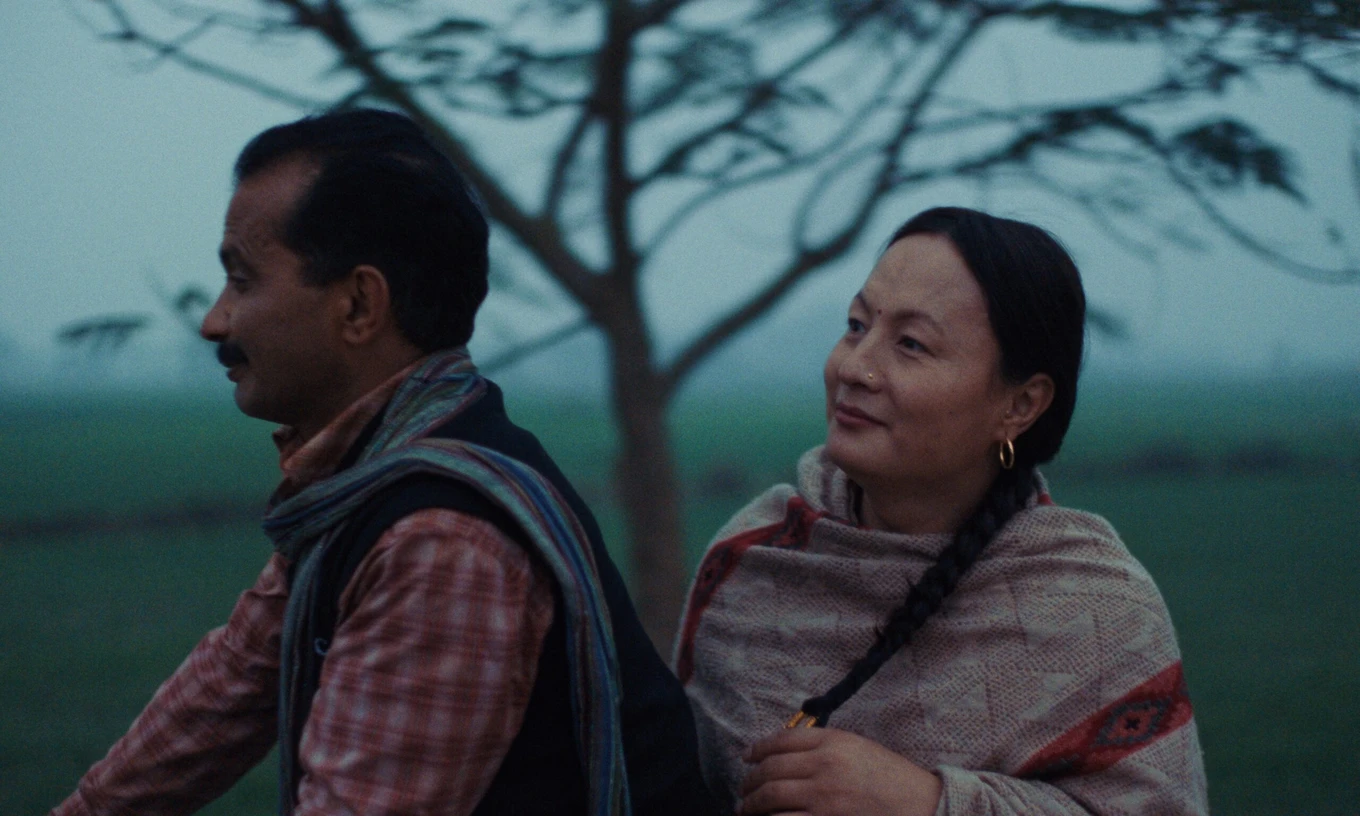
Yes, there were major hurdles that Abinash and producer Leite had to overcome in getting Elephants in the Fog to screen, but the flipside was the sense of freedom that was experienced by all when these obstacles were behind them.
“When you make cinema like this in Nepal, limitation is your constant co-author,” says Abinash. “The biggest hurdles were time, resource scarcity, financing a film that refuses commercial tropes, navigating unpredictable weather and remote landscapes, and above all, protecting the safety and trust of the non-professional Kinnar women who entrusted us with their stories. Every step felt like fighting for the right to exist on screen.”
“Moments we could never have written.”
“But the great surprise was what emerged once we got these hurdles out of the way. When you cast women who have lived these truths, you realise acting isn’t about technical trickery, it is about vulnerability and trust,” he adds. “The environment and our actors gave us back moments we could never have written, quiet gestures, unspoken glances and silences that only real life can provide.”
“On a practical level, I went in terrified. I was afraid the villagers wouldn’t allow us to film or rent us their homes simply because we were working with trans women,” Abinash continues. “[But] instead of hostility, the entire village embraced us, opened their doors, and helped us make the film. I went in afraid of rejection, and I left with a village that had adopted us. That was the real surprise, not just the film we made, but a level of warmth and welcome we couldn’t have predicted and could never fully repay.”
“It all started with the HBF,” Abinash signs off on his Un Certain Regard-winning Elephants in the Fog. “Everything else followed, but none of it would have been possible without that first step, and for that, I will always be deeply grateful.”
– by Nick Cunningham
HBF+Europe is supported by

A list with articles
-
-
IFFR-supported films at the 70th BFI London Film Festival
Published on:-
CineMart
-
Hubert Bals Fund
-
IFFR Pro
-
Stories
-
Tips
-
-

Hubert Bals Fund announces HBF+Europe: Post-production Support selection 2026
Published on:-
Hubert Bals Fund
-
News
-