
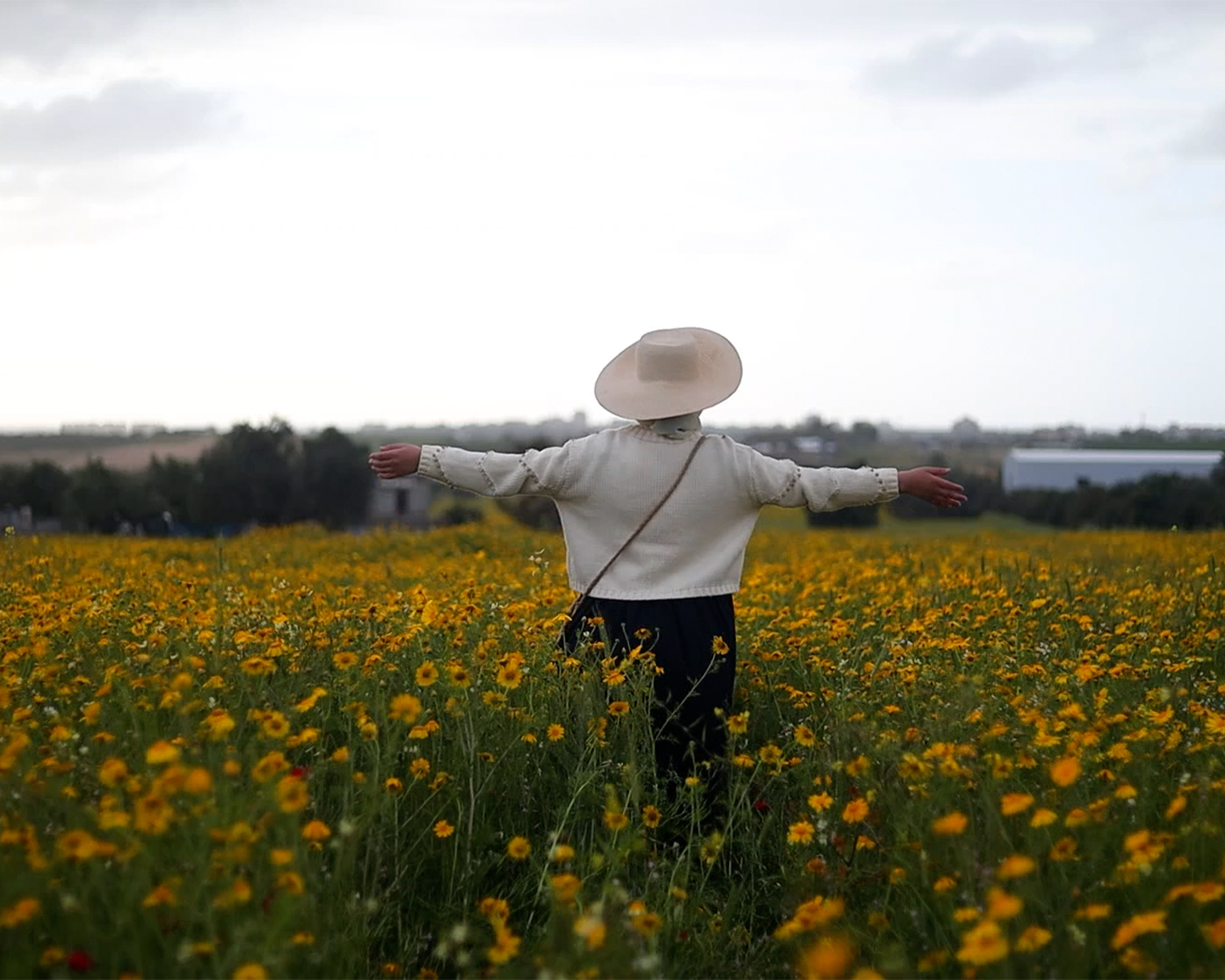
Shall We Meet Again?
Two young filmmakers – Amjad in exile in Egypt and Woroud in besieged Gaza – create a documentary together. Through exchanged footage, memories and grief over a fallen friend, they discover a new story: a testament to friendship, loss and the enduring memory of Gaza.
Key tags
Gaza, war, filmmaking, youth, friendship
Film details
- Productie bedrijf
- Dessi Films
- Productielanden
- Palestina, Egypte
- Gebaseerd op
- by Amjad Sokkar
- Lengte
- 75'
- Medium/Formaat
- DCP
Pitch
Deze inhoud is beschikbaar na het accepteren van de marketingcookies.

Synopsis
Amjad and Woroud, both in their early twenties, shared more than just their youth; they studied filmmaking together in Gaza before their world fell apart. The devastating war forced a harsh separation: Amjad fled to the relative safety of Egypt, while Woroud, against her family’s wishes, chose to stay rooted in the besieged city.
Now miles apart – Amjad in Alexandria, Woroud in Gaza – they decided to face their reality the only way they know: by making a film. They became both the directors and the main subjects of a documentary about a city divided.
Their project became a lifeline of daily voice notes, shared footage, and raw ideas. Woroud walked through Gaza’s rubble-strewn streets, searching for an elderly 'Hajja' who had lived through the Nakba (the mass displacement and dispossession of Palestinians during the 1948 Arab-Israeli war), hoping to connect past resilience with present survival. Although she could not find the perfect person, she sent every fragment of her search to Amjad.
Meanwhile, Amjad worked from Egypt, looking for Woroud’s friends who had also fled the conflict. He recorded their testimonies in exile, trying to piece together a map of their shared lost lives, and sent his footage back to Ward. He even arranged for Woroud to visit his mother’s half-destroyed family home, so she could capture what remained of his history.
The story took an emotional turn when Amjad came across a documentary about Fatima Hassouna, their mutual friend and fellow film student who was killed during the war. Amazingly, he discovered that Woroud also appeared in some scenes with Fatima. This coincidence broke their emotional distance, sparking long and heartfelt conversations about war, friendship, and cinema.
Through these exchanges, and through their shared grief and memories, the film they were making finally took its true shape – becoming a powerful testament to friendship, loss, and the enduring memory of Gaza.
Director statement
What remains etched in my mind about Gaza is its image before the war: its simple, quiet streets, and its vast sea with its deep blue color. I keep archival materials that I return to from time to time to restore the city’s features in my memory, while Woroud helps me film the same places as they appear today – an attempt to reassure me that Gaza is still okay despite everything it has endured. Yet every time, I’m shocked by the extent of the change, by the disappearance of the details I was attached to, and by the destruction that erased the place I once knew.
Since arriving in Egypt, I’ve carried a heavy sense of guilt – because I left, because I distanced myself from my family, from Gaza, and from my friends while pursuing my journey in filmmaking. I try to shake off this feeling, searching for some inner peace through this film, hoping it might offer answers to my attachment to Gaza, to the longing I feel, and to the memories that remain beautiful despite years of war and destruction. Every day, I recall the small moments, the places, and the days… wondering whether I will ever return, and if I do, whether I will find the city I remember or one completely changed.
My friendship with Woroud began in a filmmaking workshop. We all dreamed of creating films that express who we are and show Gaza as we, the youth, see it. We shared this dream for years, until the war began. That’s when I decided to leave Gaza to continue pursuing my dream abroad. I remember the first time I told Woroud; she was happy for me, but when I asked if she wanted to leave too, she refused. I asked more than once: why stay in the middle of a war? She would answer: “I don’t want to leave out of fear or because I’m forced to. If I ever leave, I want it to be by choice – with the freedom to return anytime I want.”
Maybe Woroud feared leaving Gaza without being able to return. Maybe she loved the city more deeply and was more attached to it. Since I left, I’ve been in daily contact with my mother – following the news of our neighborhood, receiving photos, and filming with her help. She too refused to leave Gaza, perhaps for the same reasons that made Woroud stay: a deep attachment to the land and the city.
These emotions have weighed on me for a long time, and I need to bring them into the light so they don’t remain trapped inside me. I believe the best way is to tell them through a film – because Gaza’s stories surpass the limits of place, and it is important that the world hears the voices of those experiencing this reality, and understands that even those who survived are still unable to live normally or return to the life they once knew.
Director biography
Amjad SOKKAR (Palestine) is a filmmaker and video editor from Gaza with a BA in Multimedia and Web Development. His filmmaking journey began with Dancer of Gaza (2021), which received a post-production grant from the Between Women Filmmakers Caravan. He directed the short fiction Yazan and continued his film studies in Egypt at the We Talk Cinema School. Sokkar has led documentary workshops for young women filmmakers from Gaza, Yemen, Egypt and Sudan, supervising several impactful films. He has worked with CARE International and the Al-Saher news platform, and participated in the CineGouna Emerge Programme with his documentary project Shall We Meet Again?
Woroud ALQASSAS (Palestine) is a filmmaker and photographer from Gaza known for her award-winning work documenting life in conflict zones. She has collaborated with CARE International, Action for Hope and ConnectHER, focusing on stories of women and resilience. AlQassas has trained more than 25 young filmmakers in Gaza, with several of their films gaining festival recognition, including the award-winning The Miracle Girl. She is developing her feature documentary Will We Meet Again?, continuing her commitment to preserving memory through cinema.
Financiering en contact gegevens
- Budget
- € 350.000
- Financiering rond
- € 11.500
- Financierders
- Dessi Films, Directors’ personal contribution , Munira AL-Ansari
- Zoekt naar partners uit
- Egypt, Qatar, Palestine
- hend.dessifilms@gmail.com
Huidige status
Development
Goals
Our goal at CineMart is to build a strong professional network that opens concrete production and funding opportunities, and to find an international producing partner who believes in the project. We seek expert guidance to refine our creative and financing materials and increase access to international funding paths. We also aim to expand potential avenues for the film’s future circulation, present our artistic vision clearly, and establish long-term relationships that can support the project through development, production, and distribution.