Do You Know Anything About OMID?
Aya shoma chizi darbare OMID midanid?
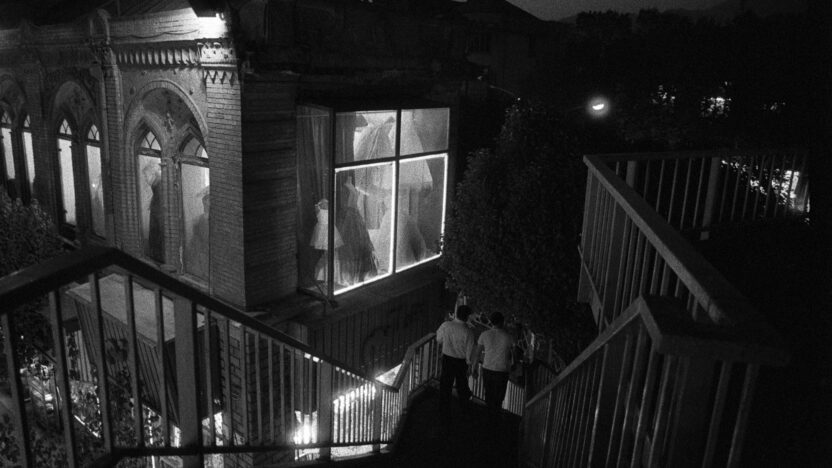
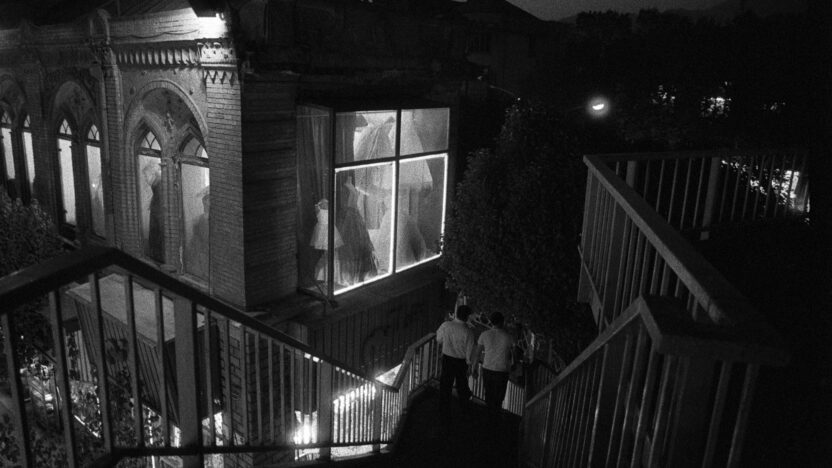
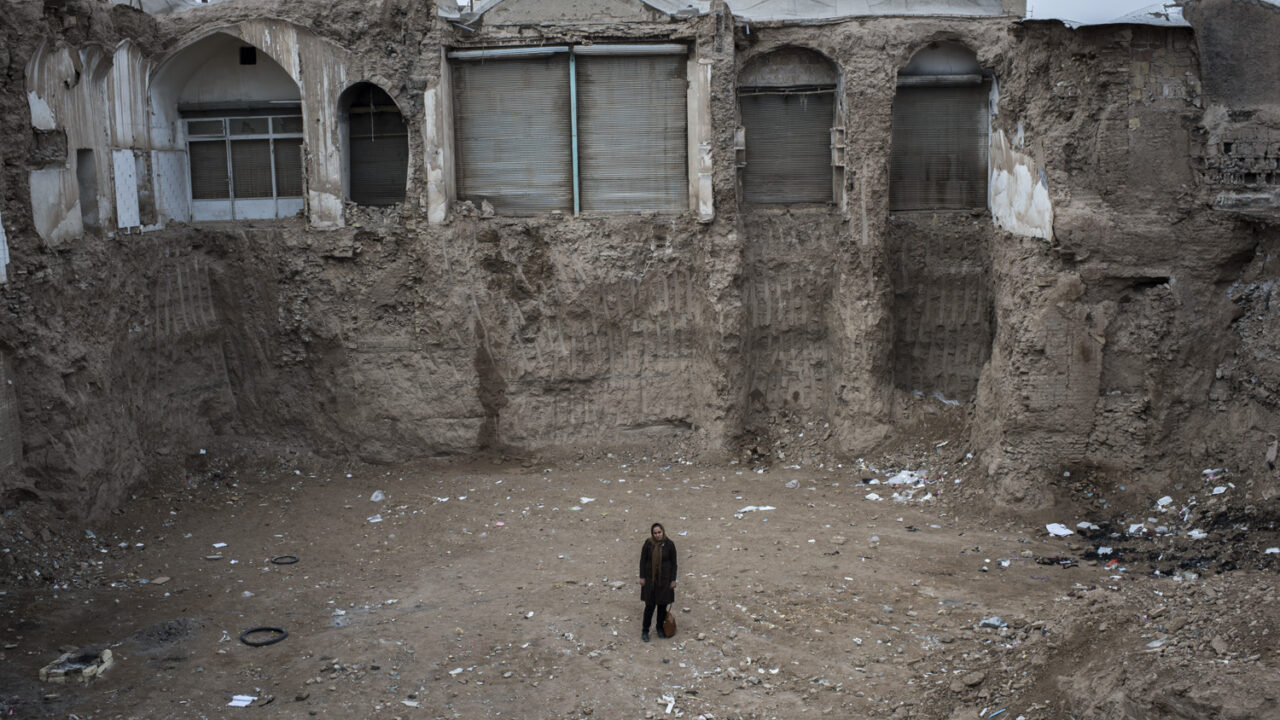
A couple has lost their child. During their journey to find him, we learn about their past as former political prisoners, as well as the truth about their relationship with the child. Who are they really, and what are they hiding?
Film details
- Productie bedrijf
- Key film, Promenades Films, 2 Pilots Filmproduction
- Producent
- Keywan Karimi
- Productielanden
- Iran, Frankrijk
- Gebaseerd op
- Original screenplay by Keywan Karimi
- Lengte
- 100'
Pitch
Deze inhoud is beschikbaar na het accepteren van de marketingcookies.
Synopsis
Reza and Maryam are a middle-aged couple. He is a house cleaner and also a handyman. They live in South Tehran, in a home located between two train lines. It is a very ordinary house where the sound of trains and metros are heard all the time. Reza’s wife is around 50 years old, with a tired face. Their 23-year-old son is lost: did he commit suicide or has he disappeared? Omid was a computer science student. The reason for his absence is unknown, and the only thing left of him now is a one-year-old stray cat that he had taken care of in the house. While travelling with the couple in search of their son, we progressively understand their background: both former political prisoners, they had experience of violent interrogations. Through the places they frequent, the memories they share, and their attachment to Omid, the hidden parts of their life are gradually revealed. In their rare dialogues, they try to give answers to their pasts and to Omid’s disappearance.
Maryam only tells the stories of her past life to her friend Sara, a sex worker. Through their conversations, we enter the private realm of her past life, learning of a secret she will always carry with her – a child. She felt it one day while praying: how could she be pregnant? The life in her womb could have come from her ex-husband, who disappeared that year, or it could have been sown by an interrogator when, while interrogated, she passed out.
Reza goes to different houses each day to work, cleaning and fixing things for all kinds of people. With him, we get to see how differently social classes live. During a trip to the city, Reza meets Saiid, a middle-aged man. He used to be Maryam and Reza’s interrogator in prison. He has changed his personality from that time and is now a business man.
While Reza fixes the boiler, he starts speaking to Saiid, and gets new information about Omid.
Director statement
This film is based on my experience in prison. Up until now, political prisoners were always kept in Evin prison. The film refers to the dark years of 1980s’ Iran, just after the revolution during which many political prisoners were executed and murdered in the prisons of the Islamic Republic. During operations that lasted for over three weeks by decree and religious fatwa of the religious leaders of Iran, about 3,000 political prisoners, including left-wing people and activists were executed in Tehran. Their bodies were transported in meat trucks to various places, among which the south of Tehran, to a site called Khavaran. The executions and burials were kept secret and illegal. People were murdered secretly during the night and then transported and dumped, without any name or address. With this background, I found an interesting true story which I rewrote with the help of my imagination. I worked on it and started from the theme of the family relationship, and then went deeper to address the real problem, which is political and conflictual. Indeed, this historical period had almost been completely repressed even in the collective memory of the Iranian people. Now, after many years, news leaked out of the system, and some learned that the dead were buried in the place named Khavaran. But how could we be sure? How can we be sure that the grave with a name is really the grave of that person? There was no evidence of execution chambers. No one could be sure whether a person’s testimony was true or not, and why they testified at all. Nothing is certain and no words are spoke. No one is trustworthy in this field. This has led to a conscious doubt in those who were involved in the catastrophe, while at the same time they have to forget and to remember why they are still alive.
The movie’s background is based on a few characters who look like each other. They are each others’ replacements. Omid is a Persian name for boys, which originally means hope. Hope is the object which has been lost in the film, and we are searching for that. For this reason, it is not clear why Omid, the child of this family, has disappeared: suicide, loss or execution. Omid is an object for passing through time and between locations.
Director biography
Born in 1985, Karimi is an Iranian filmmaker of Kurdish origins. His film career has a political basis, which is visible running through all of his films throughout his career. His short films, such as Broken Border (2012) and The Adventures of a Married Couple (2013), were awarded in numerous international film festivals. Because of his documentary Writing on the City (2015), focusing on the graffiti painted on Tehran walls from the 1979 Islamic Revolution to the 2009 re-election of Mohamoud Ahmadinejad, Karimi was arrested and held in isolation in December 2013. In October 2015, he was condemned to six years in prison and to 223 lashes for “offending Islamic sacredness and propaganda against the system”. In 2016, a few weeks before going to prison, he made Drum, his first feature film. The 2016 Venice Film Festival premiered Drum in the Critics’ Week section. Recently he has been working on his second feature film Do You Know Anything About OMID?, which has been selected for La Fabrique Cinéma at the 2020 Cannes Film Festival. This film is an original script written by Karimi himself, his first foray into scriptwriting as Drum was based on the book of the same name. Karimi also has a new documentary film currently in the editing phase. This documentary is based on his experiences during the time he was arrested and waiting to serve his sentence. The film shows an interesting parallel between a son and mother living together after a long time of lives apart.
Financiering en contact gegevens
- Budget
- € 800.000
- Financiering rond
- € 320.000
- Financierders
- Key Film, Private investment, France Region Sud Development, Promenades Filmes
- info@keywankarimi.org
Huidige status
We have finalised the script and the development of the project after La Fabrique in 2020. Right now we are ready to start the process of financing the project. We are looking for European and worldwide partners. We have prepared a complete catalogue in different languages for the project including the script with story board, visual elements, statements and all of the materials necessary for the funds and programmes.
Goals
We are looking for co-producers around the world with a special focus on the Netherlands, Germany, Norway, Sweden and Switzerland to complete the financing. We are also open to having talks with Asian co-production companies, especially from China and South Korea. We also want to meet sales agents, distributors and equity partners as we need all kind of talents and forces. We are confident to be able to film in Iran by the end of 2021 or in 2022.