

Mine Land
Mine Land is an immersive VR installation placing audiences in a Bosnian minefield with deminers – former enemies now clearing deadly war remnants. Equipped with weighted vests and tools, users kneel, sweep, and probe the soil. When mines are discovered, black-and-white flashbacks expose the buried past, asking: when is a war really over?
Key tags
post-conflict, documentary, trauma, justice, soil, pollution
Project details
- Productie bedrijf
- Katja Verheul, Katja Verheul
- Producent
- Katja Verheul
- Productielanden
- Nederland, Bosnië en Herzegovina
- Gebaseerd op
- Original Screenplay by Katja Verheul
- Lengte
- 25'
Pitch
Deze inhoud is beschikbaar na het accepteren van de marketingcookies.
Synopsis
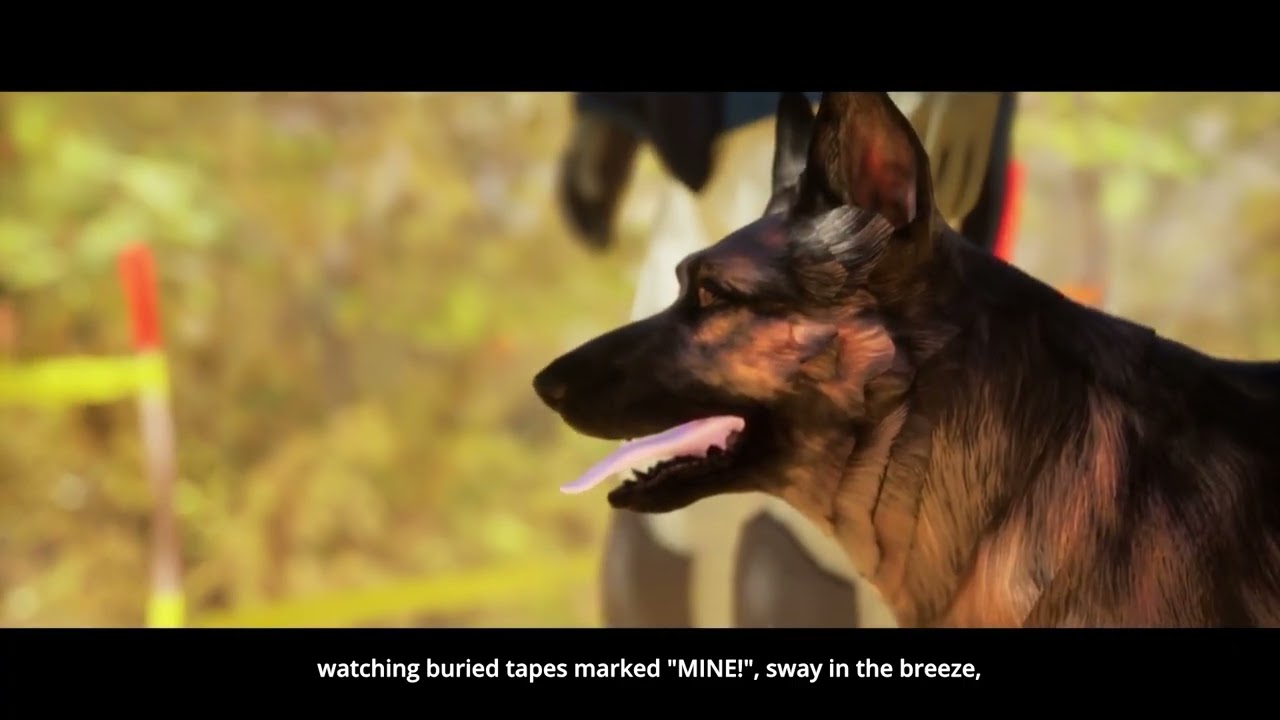
Mine Land places you inside a minefield in Bosnia and Herzegovina, thirty years after the war ended. Dressed in a bulletproof vest and VR headset, you kneel in a forest where yellow tapes marked "MINE!" stretch between trees. You help Amir, a deminer, sweeping with metal detectors and probing soil with authentic tools after demining dogs complete their first sweep.
When you discover a mine, the world shifts to black and white. Through fragmented memories, Amir's story unfolds: as a young soldier in 1995, he laid mines in this forest, shouting at enemies across the hill. One of those voices belonged to the man now beside him – his former enemy, now his colleague and friend. "We became great friends, while for four years we were great enemies," they laugh together.
The flashbacks reveal Amir's injury from a booby-trapped mine, and years later, his body still remembers: in a cornfield, he throws himself down, expecting an explosion. The trauma remains buried in his body, just as mines remain buried in soil.
Recent conflicts have seen nations withdraw from landmine ban treaties despite international agreements. Mine Land confronts a disturbing reality: while Bosnia struggles to clear minefields three decades later, new mines are being laid in active war zones, creating minefields that will claim victims for generations.
Through Amir's story of dismantling weapons he once planted, working daily alongside his former enemy in life-threatening conditions, Mine Land explores how reconciliation unfolds through dangerous labor. Their collaboration becomes a meditation on responsibility, forgiveness, and peace – while asking urgent questions about our failure to prevent new minefields.
The minefield becomes a map, revealing thirty years of clearance work. Finally, we see locals using the land again, freed from its deadly past. Yet the experience reminds us: while ground may be cleared, human trauma remains buried. The scars in Amir's body and mind persist. When is a war really over?
Creator statement
As a child, I grew up with stories from my grandfather, a resistance hero, and my father, who reported on wars for Dutch television. Both left a deep impression and form the basis for my research into war and the damage that remains. An important question in my work is: what is the impact of war on humans and nature?
This quest resulted in projects like Toni and Bleri (2018) and What is Left Behind (2026). But my first visit to a minefield in Kosovo in 2017 fundamentally changed my perspective. I was deeply impressed by what was still hidden, deadly remnants waiting beneath a peaceful surface. The meticulous process of scanning kilometers of ground revealed a reality invisible to most of the world.
What struck me most were young deminers sweating in the burning sun, who hadn't experienced the war but were confronted daily with its consequences. Their work embodied a profound truth: war doesn't end when the guns fall silent. It continues, hidden beneath the earth, claiming new victims decades later.
My visit to the minefield in Čelić, Bosnia and Herzegovina, in summer 2025 crystallised the concept for Mine Land. Standing in that forest, wearing a bulletproof vest in 40-degree heat, watching barrier tapes marked "MINE!" sway in the breeze, I experienced the absurdity and terror of invisible violence. The bright yellow ribbons marked boundaries between safety and death.
As a filmmaker, I've always struggled with the limitations of the flat screen. How do you convey the physical tension of kneeling in a minefield? How do you capture the weight of a bulletproof vest, the muffled sounds through a visor, the amplified sound of your own breathing? Traditional documentary forms couldn't transport viewers into this reality, they could only observe from a safe distance.
Virtual reality offered the solution. VR allows me to truly take users to the places I've visited, to let them meet the people I've spoken with, and to share experiences that cannot be captured within traditional frames. By physically placing users inside a recreated minefield – complete with barrier tapes, scattered leaves, authentic tools, and weighted vests – Mine Land transforms observation into embodied experience.
The urgency has only intensified. Thirty years after the Bosnian war, large areas remain inaccessible and continue to claim victims. Recent developments are deeply troubling: the US delivered anti-personnel mines to Ukraine despite international treaties, and Poland and the Baltic states withdrew from the landmine ban treaty in March 2025. New wars are creating fresh minefields even as we struggle to clear old ones.
Mine Land asks a fundamental question: when is a war really over? Through the story of a former soldier now dismantling the very mines he once laid, working alongside his former enemy, the project reveals how reconciliation happens through daily, dangerous work. Their collaboration offers a powerful meditation on responsibility, forgiveness, and the long path toward peace.
By blurring boundaries between documentary, installation, and participatory art, Mine Land becomes transformative – an experience designed to resonate long after the VR headset is removed, challenging viewers to consider their relationship to conflict, trauma and our collective responsibility for war's invisible legacies.
Creator biography
Katja VERHEUL (1988, Netherlands) is a researcher, visual artist and filmmaker based in Amsterdam. She holds a Bachelor of Audio-Visual Arts from the Gerrit Rietveld Academie and a Master of Fine Arts from Goldsmiths University. While at the Gerrit Rietveld Academie, she directed the short The Process (2014). In 2017, she collaborated with artist Jane Chan for her short film Where is the riot at? (2017). Toni and Bleri premiered at the 2019 Visions du Réel. Verheul directed Maiden (2019) during her residency at YARAT Contemporary Art Space in Baku, Azerbaijan. Her fifth short, Improvised Objects, had its world premiere at IFFR 2021. She was a resident at the Jan van Eyck Academie (2018–2019), a participant at VISIO - European Identities, New Geographies in Artist Film and Video (2018), FilmForward (2020–2021) and Rotterdam Writers’ Rooms (2024).
Financiering en contact gegevens
- Budget
- € 120.000
- Financiering rond
- € 30.000
- Financierders
- CBK Rotterdam 2024, Mondriaan Fonds 2024, Stimuleringsfonds 2025
- Zoekt naar partners uit
- Worldwide
- katjaverheul@gmail.com
Huidige status
Mine Land is in development. We secured funding from CBK Rotterdam, Creative Industry Fund NL, the Netherlands Film Fund and Mondriaan Fund to create a teaser and conduct technical tests. In August 2025, we documented a minefield in Čelić, Bosnia with Norwegian People's Aid and interviewed their deminers. We're now developing the complete VR script, refining the narrative structure, and preparing for full production, pending additional financing.
Goals
Mine Land seeks producers in the Netherlands, Bosnia and Herzegovina, and internationally – co-producers interested in immersive documentary and post-conflict themes to help secure financing and distribution.
Lightroom offers opportunities to connect with producers, collaborate with VR creators, gain technical expertise, and access international distribution networks. We're interested in meeting festival programmers, cultural institutions, and conflict legacy project partners.
Post-Lightroom, we aim to secure funding and partnerships for screenings at festivals, museums, and demining sites, bringing Mine Land to global audiences as an artistic and educational experience.


