

Jarkov
Jarkov, a remarkably well-preserved 20,000-year-old woolly mammoth encased in a Siberian permafrost tunnel, becomes the focal point for exploring time and matter beyond human grasp.
Key tags
mammoth, siberia, permafrost, underground, darkness, time
Project details
- Productie bedrijf
- Fondazione In Between Art Film
- Producent
- Leonardo Bigazzi
- Co-Producenten
- Mori Art Museum, Mondriaan Fonds
- Productielanden
- Italië, Nederland, Japan
- Gebaseerd op
- Original screenplay by Maya Watanabe
Pitch
Deze inhoud is beschikbaar na het accepteren van de marketingcookies.
Synopsis
Over the last two decades, the Arctic permafrost has lost one meter of ground each year. As it melts, it uncovers carcasses from the Pleistocene Epoch. Buried in ice for millennia, these frozen bodies appear remarkably well preserved from time and material decay, sometimes maintaining fur, skin, and internal organs intact.
Jarkov is a complete woolly mammoth who died 20,000 years ago. Upon discovery, instead of being excavated, he was removed as a single, solid mass along with the surrounding soil. As a result, the mammoth remains are encased in a block of permafrost, only displaying visible patches of skin and hair on the surface, as well as two tusks protruding from it.
Carved from the permafrost in northern Siberia, an underground tunnel houses the 23-ton block containing Jarkov. The frozen subterranean cavern maintains a constant temperature of -12 °C throughout the year, preventing the block from thawing.
Creator statement
Alongside dinosaurs, woolly mammoths are emblems of prehistoric times. Merely mentioning them evokes deep time and extinction.
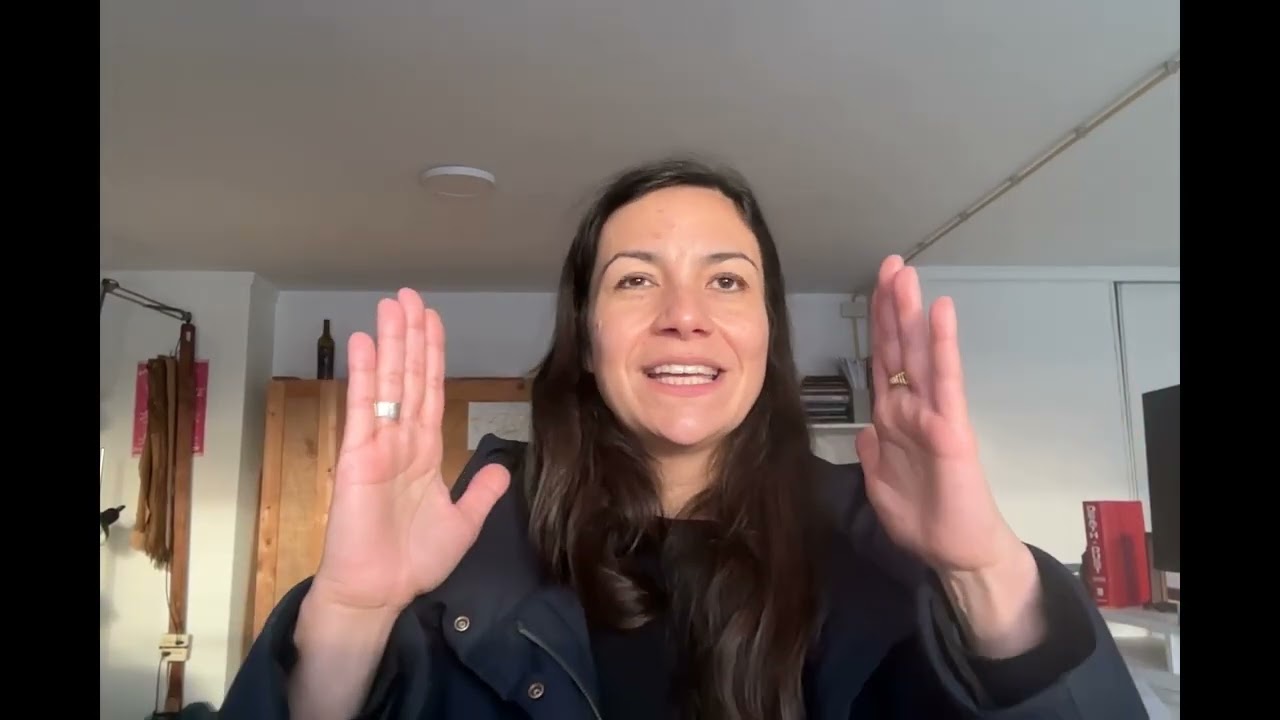
My work derives from an intimate engagement with death, mortality, and their aftermaths. It follows a documentary impulse, drawing me toward first-hand experiences of recording and engaging directly with dead bodies. This direct contact is essential, as it involves confronting death’s materiality itself, rethinking our relationship with it, and reconsidering its visual representation. Central to my work is the relationship between a living being—myself—and a corpse, mediated by a meaning-making device: the camera. Under specific conditions, these encounters open the possibility for alternative logics of representation to emerge from the corpse’s resistance to visual legibility, challenging traditional ways of seeing and depicting.
In this case, the encounter between myself—a 42-year-old living human—and Jarkov, a 20,000-year-old prehistoric creature, establishes a relationship between two separate historical narratives and time scales: recorded human history and natural history, human lifespan and deep time. The human lifespan marks the duration and scope of human memory, as well as the temporality that defines the reach of recorded history. Conversely, Jarkov's temporality falls within the notion of deep time and the category of natural history. Labelling these categories as separate serves here only as a starting point for collapsing the distinction between them and for questioning notions of presence, memory, and history beyond human temporality, intelligibility, and representability.
This questioning extends into notions of darkness and the underground, which in the Western imagination have long been figured as irrational, barbarian, and subordinated—associations embedded in a global spatial and racial order. Within this framework, the underground holds both literal and symbolic implications. As a physical space, it is a place devoid of sunlight, existing primarily in darkness.
The Jarkov mammoth remains partially hidden, and it is this concealment that raises questions about the reach and limits of human time and memory. Although preserved—a bearer of the (de-)extinction imaginary—Jarkov is buried inside a block of permafrost. The mass of sediment that surrounds him denies visual access; apart from his bony tusks, his state of preservation can only be glimpsed through the fur protruding from the block. His suspended, undecayed body seems to shatter time’s passage as a decomposing force, opening the possibility of a different relation to time. In our shared imagination, the haunting mammoth almost permeates the present, becoming coetaneous with us.
The video depicts an abyssal black space. A few glares of light and starkly contrasted shapes appear as the camera wanders through an underground tunnel. The darkness obscuring the frame does not empty the space; instead, it materialises the obscured and subterranean as a generative domain, beyond the logics that impose light, surface, and visibility as mandates.
Playing with light and shadow to articulate depth, time, and space does not perpetuate the humanistic idea of lightness and shadow as antagonistic forces. Quite the opposite. I propose darkness as generative, obstructed visibility—one capable of provoking a disorienting reflection on cognitive and visual intelligibility. It is a bet on what matter and time can mean beyond human lifespan and finitude, positioned through a camera held in vulnerable, humble relation to what escapes full sight.
Creator biography
Maya WATANABE (1983, Peru) is a visual artist and filmmaker working primarily with video installation. Her work explores perception, violence and the limits of representation, often through spatialised moving-image environments. She has presented work at institutions including De Pont Museum in Tilburg, MAXXI in Rome, Sharjah Art Foundation, Palais de Tokyo in Paris, Fridericianum in Kassel, Mori Art Museum in Tokyo and MASP in São Paulo. Her work has also been shown at international biennials and festivals such as Manifesta, Videobrasil and the Havana Biennial. Based in Amsterdam, Watanabe teaches at the Gerrit Rietveld Academie and is currently a PhD researcher at Goldsmiths, University of London.
Financiering en contact gegevens
- Budget
- € 50.000
- Financiering rond
- € 50.000
- Financierders
- Fondazione in Between Art Film, Mori Art Museum, Mondriaan Funds
- Zoekt naar partners uit
- Worldwide
- leo.bigazzi@gmail.com
Huidige status
The project is almost finished.
Goals
I would like to connect with potential venues in which I could show the work once it is finished.